
Moving Toward Zero-Accident Warehouses
Warehouse safety remains one of the top operational challenges facing WHS (Workplace Health and Safety) and supply chain professionals worldwide. Every day, industrial facilities buzz with intense activity—heavy forklifts carry tons of inventory down narrow aisles while workers on foot cross paths with these massive machines. When operations move at modern speeds, a single blind spot or momentary distraction can change lives forever.
Unfortunately, traditional safety methods like floor paint, high-visibility vests, and convex mirrors are no longer enough to mitigate risk. True safety requires smart technology. That is why next-generation solutions are stepping in to eliminate human error entirely.
What is a Forklift Pedestrian Collision Avoidance System?
A forklift pedestrian collision avoidance system is an active industrial safety solution that utilizes computer vision, AI, and edge computing to detect human presence in real-time around material handling equipment. Unlike passive alarms, it actively alerts operators to immediate pedestrian hazards within customized 360-degree proximity zones to prevent workplace collisions.
The system acts as an intelligent pair of eyes for the operator, scanning areas that are completely hidden from the driver’s seat. Unlike old-school backup alarms that beep constantly and blend into background noise, these modern systems are highly selective. They specifically look for human presence, equipment, or fixed obstacles, issuing precise warnings only when an actual hazard exists.
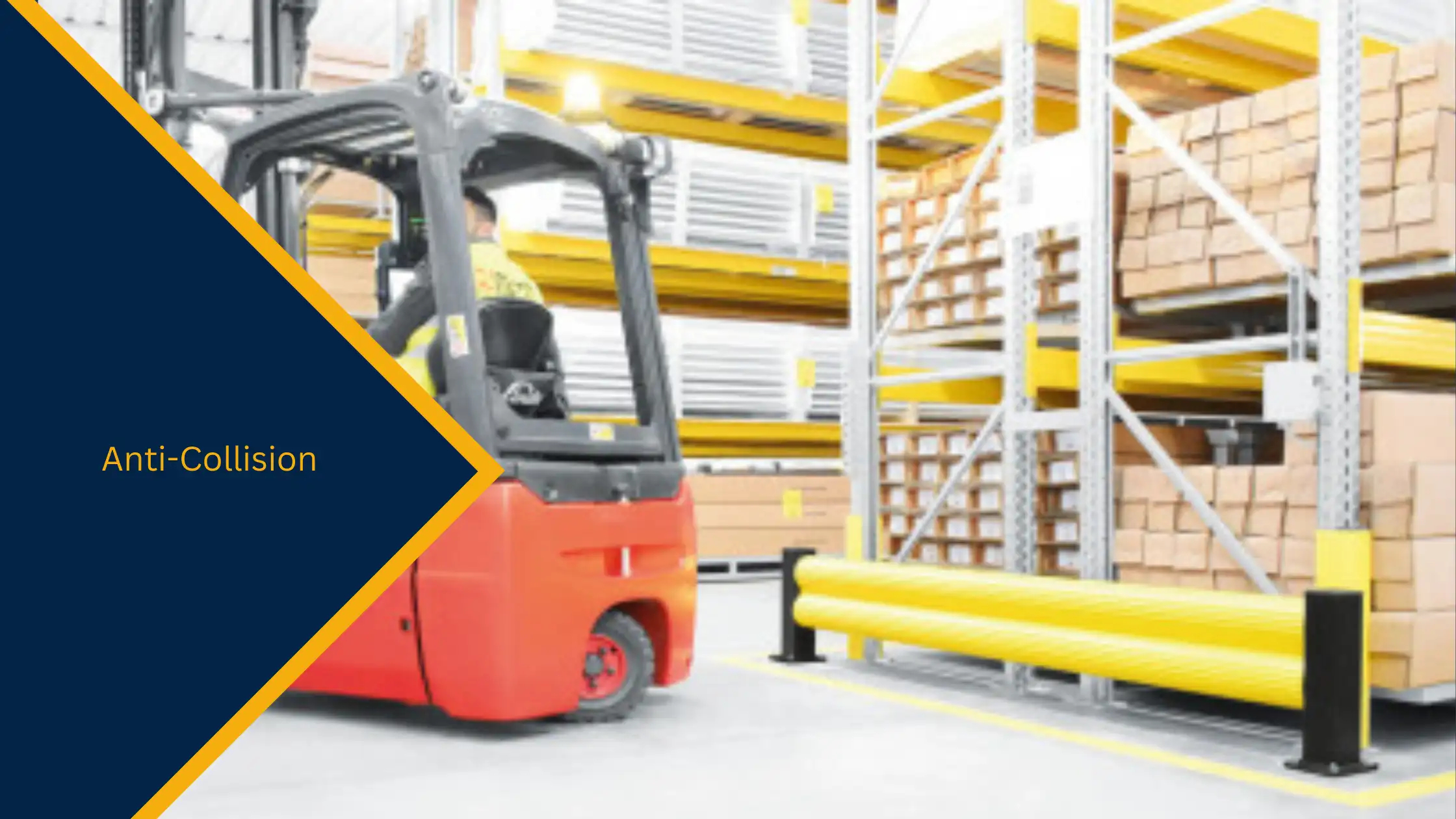
To fully grasp the impact of this technology, it helps to break down the true anti collision meaning in an industrial setting. In warehousing, anti-collision refers to the active, real-time prevention of physical impact between moving vehicles, people, and infrastructure. It goes beyond passive protection like impact-absorbing guardrails or warning signs. Instead, it uses spatial awareness and instant data processing to stop an accident before it physically occurs.
How Does an AI-Powered Forklift Safety System Work?
The breakthrough in modern forklift safety systems comes down to Artificial Intelligence (AI) and edge computing. Older proximity warning systems relied heavily on radio frequency (RFID) tags worn by workers. If a worker forgot their tag, or if the battery died, the system became useless.
Modern systems bypass this weakness by using high-definition cameras combined with intelligent computer vision. Here is exactly how the technology functions step-by-step:
- Continuous 360-Degree Monitoring: As soon as a forklift powers up, the safety system activates automatically. Modular cameras mounted on the front, back, or sides of the vehicle capture high-resolution video streams of the surrounding environment, ensuring total fleet coverage.
- Edge AI Computer Vision: The live video feeds are processed instantly by an onboard computer hub. Using advanced algorithms trained on millions of warehouse images, the system recognizes human shapes in milliseconds. It detects a worker whether they are standing still, walking, bending over, or partially hidden behind a pallet.
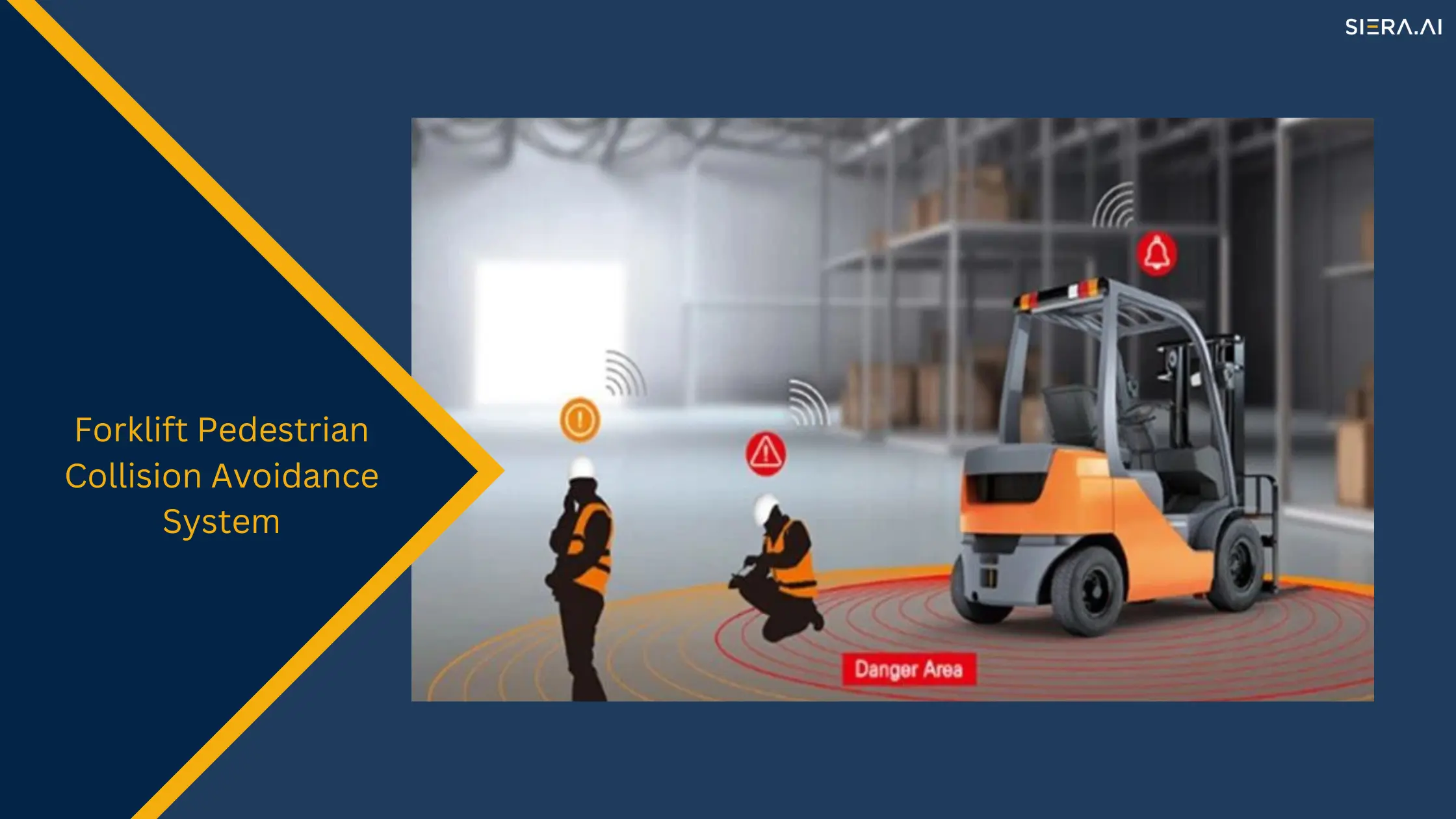
- Smart Zone Configuration: Operations managers can customize specific safety zones around each vehicle using a smartphone or tablet app. These zones are usually split into a wider Warning Zone and a tight Danger/Stop Zone requiring immediate driver action.
- Zero-Latency Alerts: When a pedestrian breaches a zone boundary, the system uses edge computing to trigger an instantaneous alert. The forklift operator receives clear visual and audible warnings inside the cab, allowing them to stop the vehicle safely. Because the processing happens right on the machine rather than in the cloud, there is zero lag time.
Why is a Forklift Pedestrian Collision Avoidance System Important for Warehouse Safety?
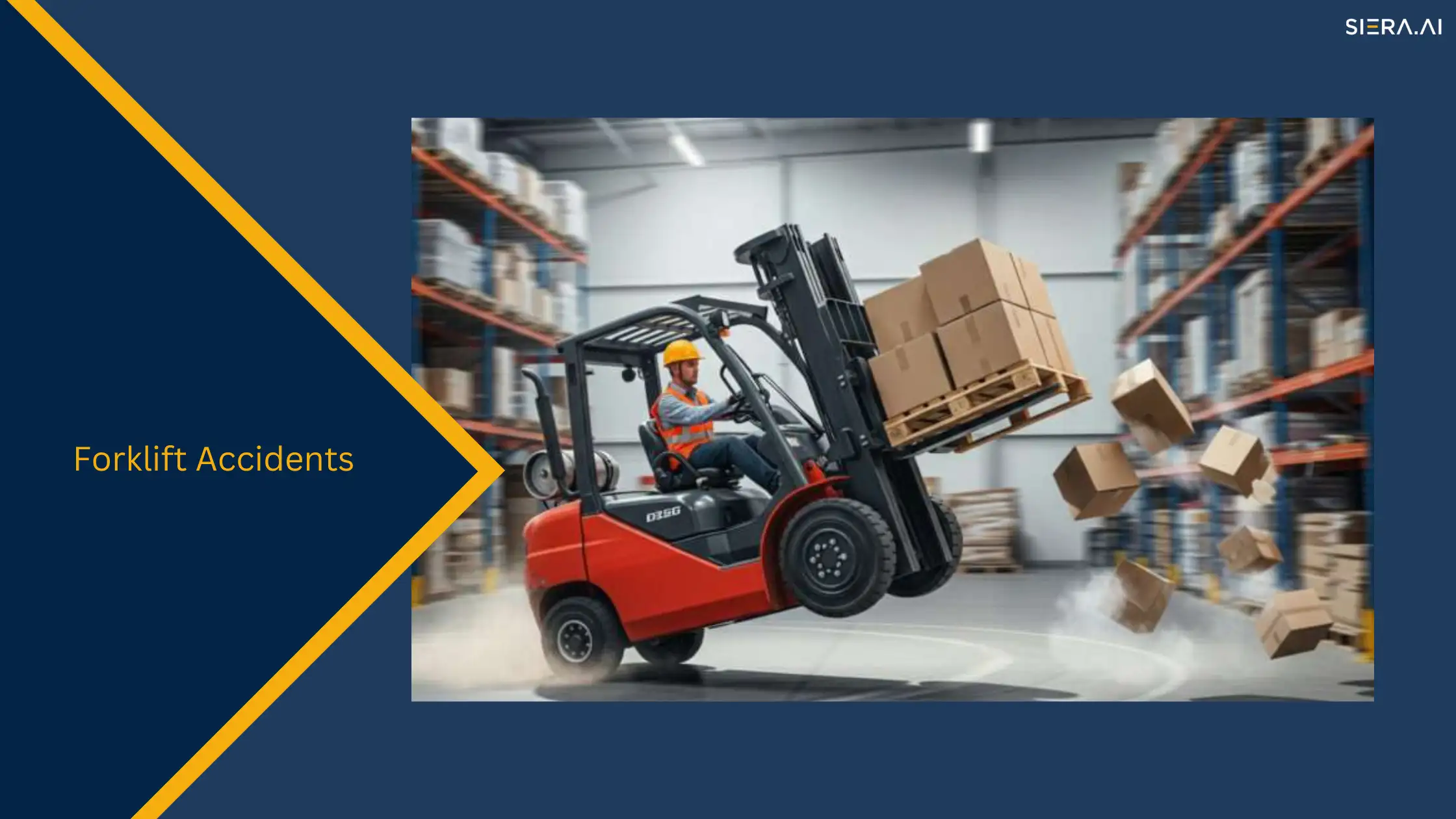
Relying purely on human sight and hearing in a busy facility is a major operational risk. Forklift operators deal with massive blind spots caused by the vehicle’s mast, overhead guards, and bulky loads. At the same time, ambient noise from machinery makes it difficult for pedestrians to hear an oncoming truck.
Implementing a robust AI-driven system is critical for several operational reasons:
- Eliminating Alert Fatigue: Traditional alarms beep continuously, causing drivers to naturally tune them out over time. AI systems only trigger alerts when a real human or object enters a danger zone, keeping operators sharp and responsive.
- Reducing Human Error: Even the best-trained drivers can experience a lapse in concentration due to fatigue or tight production schedules. An automated system provides an objective, always-on safety net.
- Protecting Diverse Fleets: Warehouses often use a mix of vehicle brands, including electric reach trucks, diesel counterbalances, walkie stackers, and order pickers. A modular, highly compatible system can be deployed universally across an entire fleet.
- Smart Traffic Management: Beyond detecting people, advanced systems can read specialized QR codes placed on fixed infrastructure like racking, barriers, or low-clearance doorways. This prevents expensive equipment damage and operational downtime.
How Many Forklift Accidents Happen Every Year? (Recent US Safety Data)
To understand why global brands are rapidly upgrading their material handling fleets, we have to look at recent workplace safety data. Industrial accidents carry massive financial costs in worker compensation, legal liabilities, and lost productivity—and the human cost is immeasurable.
According to data compiled from official updates via the U.S. Bureau of Labor Statistics (BLS) and national safety media channels, forklift-related incidents remain a leading cause of severe workplace injuries and fatalities in the United States.
| Reporting Year | Total Forklift Fatalities (USA) | Non-Fatal Injuries Requiring Days Off | Primary Cause of Severe Incidents |
|---|---|---|---|
| Last Year (2025 Data) | 78 Deaths | Approx. 7,200 | Pedestrian strikes & vehicle tip-overs |
| Current Year (2026 Projections) | On track for 70+ Deaths | Estimated 6,800+ | Blind spot collisions in high-density fulfillment centers |
Note: Data trends adapted from annual BLS national census releases and industrial safety council reports.
A deep dive into powered industrial truck statistics reveals that nearly 36% of all forklift-related fatalities involve pedestrians who are struck by a turning or reversing vehicle. These numbers prove that traditional workplace safety rules alone cannot prevent accidents in high-density fulfillment environments.
Siera.ai: The One-Stop Solution Proven by Global Enterprises
When it comes to safeguarding large-scale warehouse operations, enterprise leaders cannot afford to rely on unproven tech. SIERA.ai has established itself as the definitive leader in AI-driven material handling safety, providing a comprehensive, one-stop ecosystem that protects thousands of industrial workers every day.
SIERA.ai’s technology is built on a simple promise: Prevent accidents before they happen. By combining industry-leading AI detection with ultra-rugged hardware, their systems provide a complete answer to the industry’s toughest safety challenges.
The reliability of SIERA.ai’s technology is why some of the world’s largest, most demanding supply chain operations trust their platform. Major global corporations like Coca-Cola, Grainger, and PepsiCo rely on SIERA.ai to track asset health, prevent dangerous collisions, and monitor real-time fleet metrics across multiple facilities.
Core Features of SIERA.ai’s Safety Platform
- Class-Leading 99.8% Accuracy: The advanced vision models recognize pedestrians instantly in complex, low-light, or cluttered environments, drastically outperforming basic proximity warning systems.
- Modular Infrastructure: Designed to scale effortlessly, the hardware fits on any machine shape or size, from heavy-duty telehandlers to narrow-aisle pallet jacks.
- Continuous Safety Telematics: Every system connects to a military-grade, 2TB hot-swappable data hub. It captures continuous and event-based video recordings, complete with GPS coordinates and timestamps. This data is pushed back to a central dashboard, allowing safety managers to review near-miss trends and optimize warehouse traffic layouts.
- Autonomous Asset Protection: The system remains active the entire time a vehicle is operational, flagging potential hazards before a forklift even begins to move.
How to Design a Safe Warehouse Layout to Prevent Forklift Collisions
Deploying a high-performance safety system is the most critical step toward safety, but it works best as part of a complete warehouse safety layout. A truly secure facility combines cutting-edge AI technology with smart site organization.
1. Dedicated Walkways and Crosswalks
Clearly demarcate pedestrian-only zones using bright, durable floor coatings or physical barriers. When foot paths must cross forklift lanes, install dedicated crossing points equipped with automated warning signs.
2. High-Visibility Zoning
Use bold signage to identify high-risk zones, such as blind intersections, changing floor levels, or low-clearance racking rows. This keeps both foot workers and equipment operators highly alert.
3. Comprehensive Operator Training
Technology works best when paired with a strong safety culture. Ensure your team undergoes thorough training to understand how to respond immediately to cab alerts, handle heavy loads on inclines, and perform daily digital safety pre-checks. For a detailed look at modern accident prevention strategies, check out the comprehensive 2026 guide to AI-powered forklift pedestrian collision avoidance.
Conclusion: Take the Path to Zero Incidents
Achieving zero workplace accidents is no longer an unrealistic goal—it is completely achievable with the right technology. By moving away from passive safety gear and embracing active AI-powered detection, operations managers can successfully protect their workers, secure their inventory, and keep their fleets running efficiently.
Don’t wait for a near-miss to turn into a costly workplace tragedy. Upgrading your industrial fleet with a smart collision avoidance system is an investment that protects your workforce and stabilizes your bottom line.
Frequently Asked Questions (FAQs)
Can these systems be installed on older forklift models?
Yes. Modular AI safety solutions are designed to be completely brand-agnostic. They connect to the power systems of both older internal combustion models and modern electric material handling units.
Do camera-based safety systems record continuous video?
Many premium options feature rugged onboard recording hubs. They capture continuous video along with specific event-based clips during sudden stops or impacts, providing critical insights for safety audits.
How does edge computing improve warehouse safety?
Edge computing processes visual data directly on the machine’s hardware instead of routing it through an external cloud server. This cuts latency down to milliseconds, giving operators those vital extra split-seconds to brake safely.