
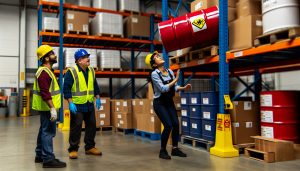
Warehouse safety analytics is the modern solution for reducing workplace accidents and increasing operational efficiency. By collecting data from industrial equipment, managers can identify risks before they lead to injuries. This proactive approach transforms safety from a manual checklist into a powerful digital strategy that protects your workforce and your bottom line.
Table of Contents
What are Warehouse Safety Analytics?
Warehouse safety analytics involve the systematic collection of data from vehicle sensors and monitoring systems to identify facility hazards. This technology tracks operator behavior, equipment health, and environmental risks in real-time. It allows leadership to move away from reactive accident reporting toward a proactive risk prevention model that anticipates danger before it strikes.
Modern facilities use these analytics to identify “near-miss” events that usually go unrecorded. For every major accident, there are often hundreds of minor steering or braking errors that serve as warning signs. Data captures these small warnings, allowing for targeted training that prevents a catastrophe from ever occurring on the warehouse floor.
Key Metrics for High-Performance Facilities
The most important warehouse safety metrics to track are impact alerts, equipment utilization, and operator compliance scores. Monitoring these specific data points provides a transparent view of floor activity at all times. High impact rates usually signal a need for better traffic flow or refined driver training to ensure peak efficiency.
Consistent data tracking improves operator accountability almost immediately. When drivers know their performance is being measured and recorded, safety compliance rises naturally. This shift in behavior leads to a 40% reduction in equipment damage on average, directly lowering operational expenses.
The Financial Impact of Data-Driven Safety
Warehouse safety analytics improve ROI by lowering the total cost of risk, including insurance premiums and equipment repair expenses. Beyond direct costs, accidents cause “soft costs” like lost productivity, administrative delays, and low employee morale. Preventing a single forklift collision can save a facility over $30,000 in combined direct and indirect costs.
When a forklift is damaged, the cost isn’t just the physical parts; you also lose the productivity of that machine and the operator during repairs. Analytics provide the transparency needed to identify “high-risk” zones in your warehouse layout. By fixing these areas, you ensure the flow of goods remains steady, predictable, and profitable.
Building a Proactive Safety Culture with Data
Creating a strong safety culture depends on transparency and using data as a coaching tool rather than a disciplinary hammer. When operators understand that data is being used to keep them safe, engagement increases across the entire floor. High-performing warehouses use “safety leaderboards” to reward top-performing drivers, turning safety into a point of professional pride.
Data allows for objective feedback. Instead of general reminders to “drive safely,” managers can provide specific coaching based on real-world events. This level of detail builds trust between management and operators. It ensures that every team member is aligned with the facility’s goal of reaching zero accidents through continuous improvement.
Implementation Best Practices
The best way to implement safety analytics is to start with a pilot program on your highest-traffic vehicles first. Begin by installing telemetry on 10% of your fleet to establish a clear data baseline. Ensure your management team is fully trained on the software dashboard before a full facility-wide rollout.
- ✅ Define Clear KPIs: Determine exactly what safety success looks like for your specific team.
- ✅ Audit Your Fleet: Identify which trucks need sensor upgrades for the best data quality.
- ✅ Focus on Coaching: Use the collected data for positive reinforcement and better driver training.
- ✅ Regular Reviews: Meet weekly to discuss data trends and adjust facility layouts accordingly.
Frequently Asked Questions
No, they actually increase overall efficiency by reducing the downtime caused by accidents and unexpected equipment repairs.
Yes, enterprise-grade systems ensure that all telemetry data is encrypted and used exclusively for internal safety improvements.
Most facilities see a significant reduction in impact-related costs and an increase in compliance within the first three to six months.
Stop Guessing. Start Protecting.
Ready to see how Siera.ai can transform your facility with data?
Free consultation for your fleet today.