
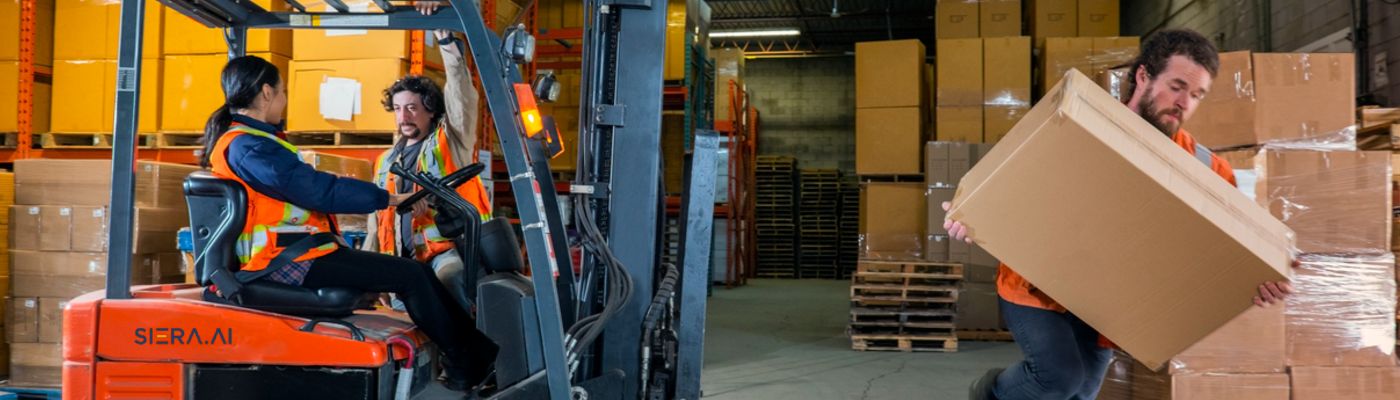
Warehouse accident prevention requires a multi-layered safety framework combining engineering controls, rigid traffic segregation, predictive telematics, and disciplined floor management. Protecting industrial workers hinges on mitigating the primary drivers of severe incidents: forklift rollovers, pedestrian-vehicle collisions, and unmanaged floor hazards. Key Takeaways: Facility Safety at a Glance
|
1. Material Handling Safety Tips
Improper loading and erratic handling cause catastrophic rack strikes and lost-load events. Eliminating these operational hazards starts with foundational mechanics:
Adhere to Load Center Limits: Verify all pallets match the rated capacity specified on the equipment’s data plate. Carrying weight beyond the designated center point changes the vehicle’s center of gravity and increases the risk of tipping.
Maintain the 4-to-6-Inch Rule: Keep fork tines tilted slightly back and positioned 4 to 6 inches above the floor during transit to stabilize the center of gravity while clearing ground unevenness.
Inspect Pallet Structural Integrity: Prohibit the staging of compromised wooden pallets. Split stringers or broken bottom deck boards lead to immediate structural failure under multi-tier storage conditions.
Deploy Visual Fork Alignment Tools: Equip vehicles with integrated mast laser guides to help operators accurately align tines into high-bay racking systems on the first attempt, preventing rear-column punctures.
2. Warehouse Traffic Management Plan
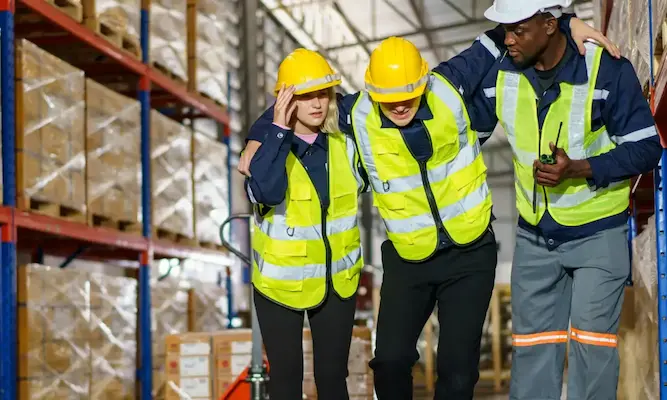
High-density fulfillment centers demand complete separation between foot traffic and heavy equipment. A structured, one-way traffic plan prevents bottleneck congestion and blind-corner collisions.
Physical Demarcation & Corridors Install Physical Steel Guardrails: Bolted floor barriers provide heavy-duty physical protection between designated pedestrian paths and active forklift corridors. Designate High-Visibility Corridors: Mark dedicated walking lanes with durable epoxy floor striping and clear directional arrows to remove ambiguity for foot traffic. | Active Visuals & AI Detection Secure Blind Intersections: Place 360-degree industrial dome mirrors at cross-aisles and equip mobile units with 4-corner blue safety spotlights that project warnings onto the floor seconds before vehicles enter intersections. Deploy AI-Driven Collision Avoidance: Equip mobile fleets with computer-vision proximity sensors from SIERA.AI to detect pedestrians, alert operators in real time, and proactively avoid collisions. |
3. Preventing Forklift Tip-Overs
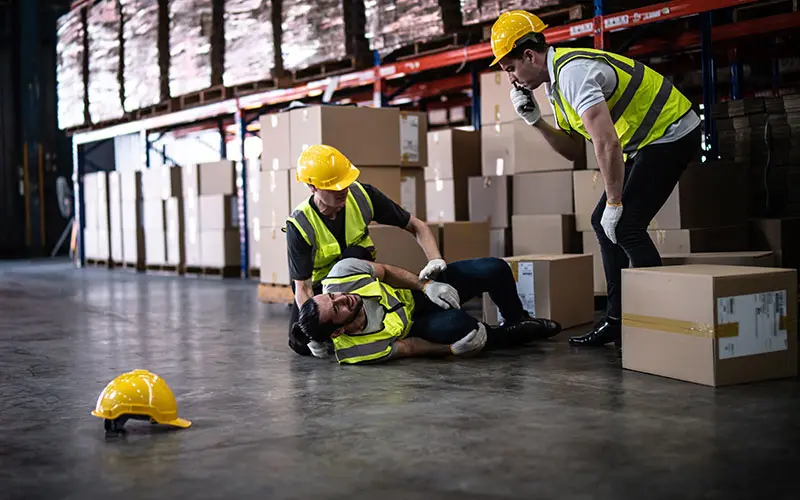
Forklift rollovers remain the leading cause of fatal workplace incidents in industrial warehousing. Maintaining stability requires strict adherence to the dynamic stability triangle formed by the front drive axle and the rear steer axle pivot pin.
 STABILITY TRIANGLE DYNAMICS Front Drive Axle Left | Prohibit Mast Elevation During Travel: Operators must never steer, reverse, or travel with a raised load. Mast adjustments should occur exclusively when the vehicle is completely stopped in front of the staging rack. Govern Speed Dynamically: Impose an 8 mph speed limit in straight main transit aisles, throttling down automatically to 3 mph when negotiating corners or driving through dock staging zones. Avoid Sudden Evasive Braking: Abrupt deceleration shifts the center of gravity forward, exceeding the stability triangle and tipping the rear counterweight. Level Dock Leveler Transitions: Ensure dock plates and levelers are secured to the trailer bed prior to entry to avoid sudden axle drops and dock-edge rollovers. |
Frequently Asked Questions
What is the leading cause of warehouse forklift accidents?
Forklift rollovers (tip-overs) represent the single leading cause of fatal workplace incidents, followed closely by pedestrian strikes and falls from forks/platforms.
How can facility managers reduce forklift pedestrian accidents?
Implement clear physical barriers, establish dedicated floor-striped walkway corridors, enforce speed limits, and deploy AI-driven pedestrian proximity-alert systems.
Why do forklift tip-overs happen most frequently?
Overloading beyond the manufacturer plate capacity, driving with an elevated mast/load, sharp turns at excessive speeds, and navigating uneven surfaces or docks.
What safety equipment must be installed at warehouse blind intersections?
Industrial dome mirrors, high-intensity blue safety spotlights, dynamic flashing LED intersection signs, and audio horn protocols before passing blind corners.
How does clean housekeeping impact warehouse vehicle safety?
Removing pallet debris, cleaning oil/water leaks instantly, and maintaining clear aisles directly prevents wheel slippage, mast instability, and sudden evasive maneuvers.
Eliminate Warehouse Collisions With Machine-Vision Safety
Equip your forklift fleet with SIERA.AI’s real-time pedestrian detection, automated impact lockouts, and digital inspection tracking.
Explore SIERA.AI Safety Systems
→ S2 & S3 AI Pedestrian Detection Cameras