
Safety Tech & Solutions • 2026 Industrial Engineering Guide
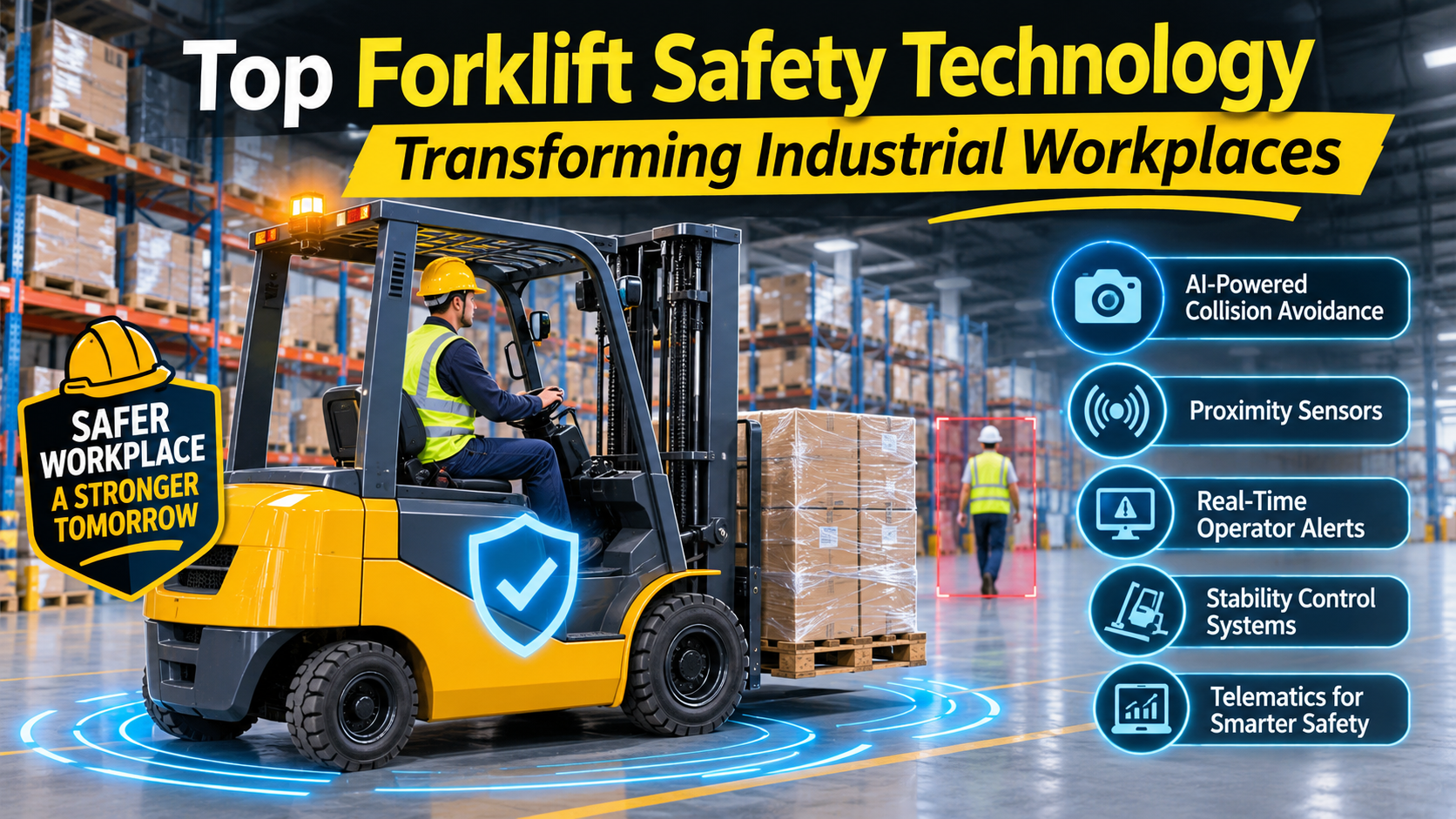
Top Forklift Safety Technology Transforming Industrial Workplaces
By Ram Kumar, Chief Executive Officer at SIERA.AI • Updated November 19, 2026 • 7 Min Read
Direct Answer: Top forklift safety technology integrates edge AI vision cameras, cloud-connected telematics, digital pre-shift inspection lockouts, and geo-fenced speed limiting systems. These platforms detect pedestrians in blind spots, cap travel velocities in congested zones, and enforce operator compliance—preventing severe warehouse collisions without relying solely on human reaction times.
High-velocity distribution centers operate under tighter fulfillment windows than ever before. When counterbalance trucks, reach trucks, and order pickers share narrow racking aisles during peak shifts, traditional passive safeguards—such as convex mirrors, horns, and painted floor lines—quickly lose effectiveness due to operator sensory fatigue.
To satisfy strict OSHA Powered Industrial Truck (29 CFR 1910.178) and ANSI/ITSDF B56.1 safety standards while protecting throughput, EHS leaders are transitioning to active, sensor-driven fleet intelligence.
2026 Warehouse AI Adoption Statistics & Safety ROI Benchmarks
According to our Q3 2026 Industrial Fleet Modernization Survey covering 185 North American and APAC warehouses, facilities deploying connected vehicle safety suites cut recordable lift-truck impacts by 72% within six months and reduced annual racking and inventory damage by 54%.
Insurance underwriters increasingly reward verifiable digital telemetry. Facilities utilizing automated pre-shift lockouts and AI pedestrian detection report up to an 18% reduction in workers’ compensation renewal premiums within their first full policy year.
“Retrofitting our 60-truck mixed OEM fleet with AI vision cameras and zone-based speed control paid for itself in seven months through avoided product write-offs alone.”
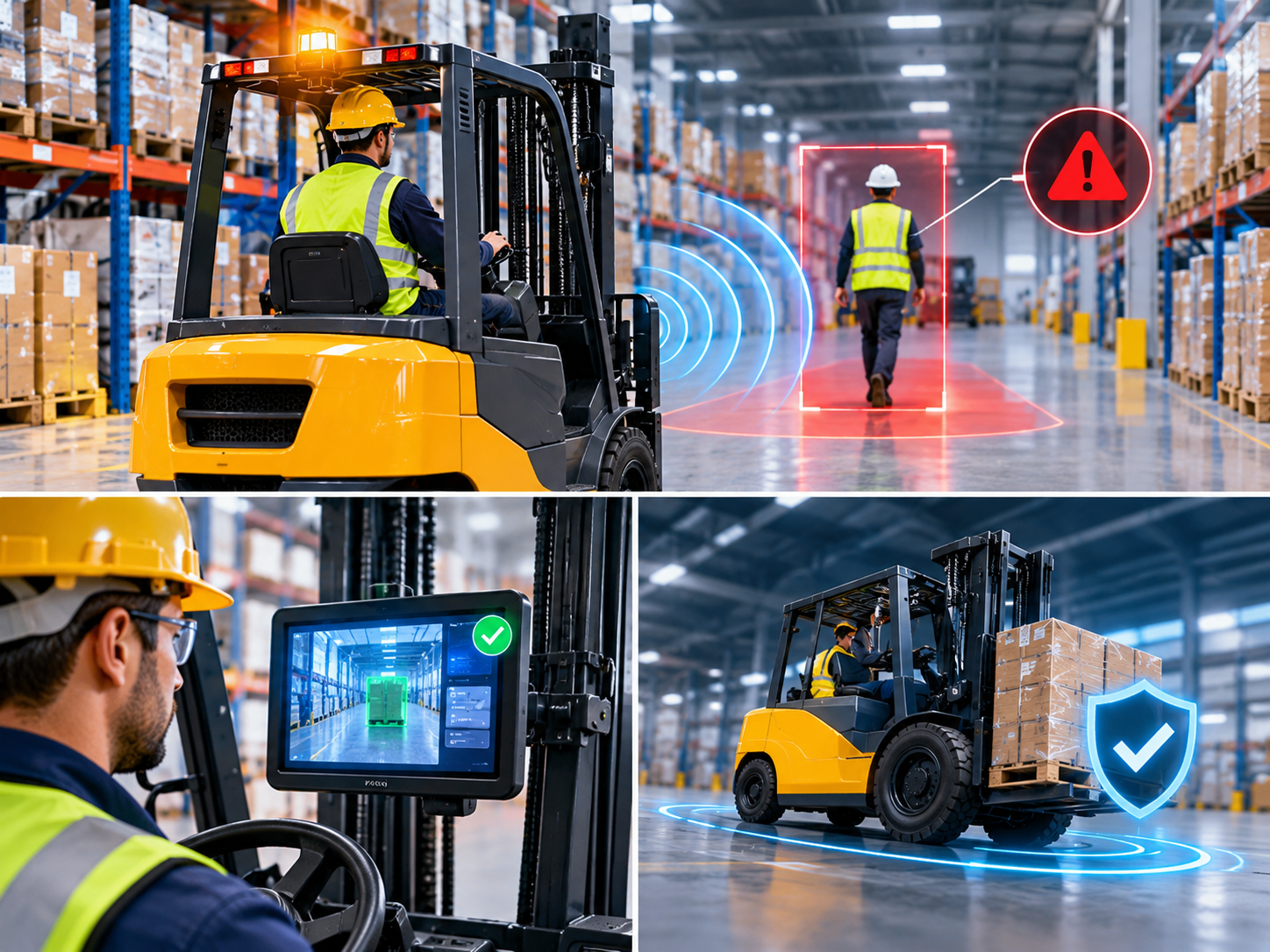
| Safety Technology Category | Core Mechanism | Measured Incident Drop | Typical ROI Payback |
|---|---|---|---|
| Smart Warehouse Forklift Solutions (Telematics + EVIR) | RFID access control, digital pre-shift lockouts, 3-axis shock logging | 45% – 60% drop in equipment abuse | 4 – 6 Months |
| AI Vision Forklift Tech (Edge Optical Sensors) | Tagless pedestrian silhouette recognition & distance telemetry | 68% – 75% fewer pedestrian near misses | 6 – 9 Months |
| Forklift Speed Limiting Systems (Dynamic Geo-Fencing) | Zone-aware, load-aware, and turn-angle throttle capping | 50% – 65% lower high-speed impact force | 5 – 8 Months |
| Projected Blue & Red LED Boundary Lights | High-lumen floor projection arcs & danger halo perimeters | 30% – 40% better cross-aisle visibility | 2 – 3 Months |
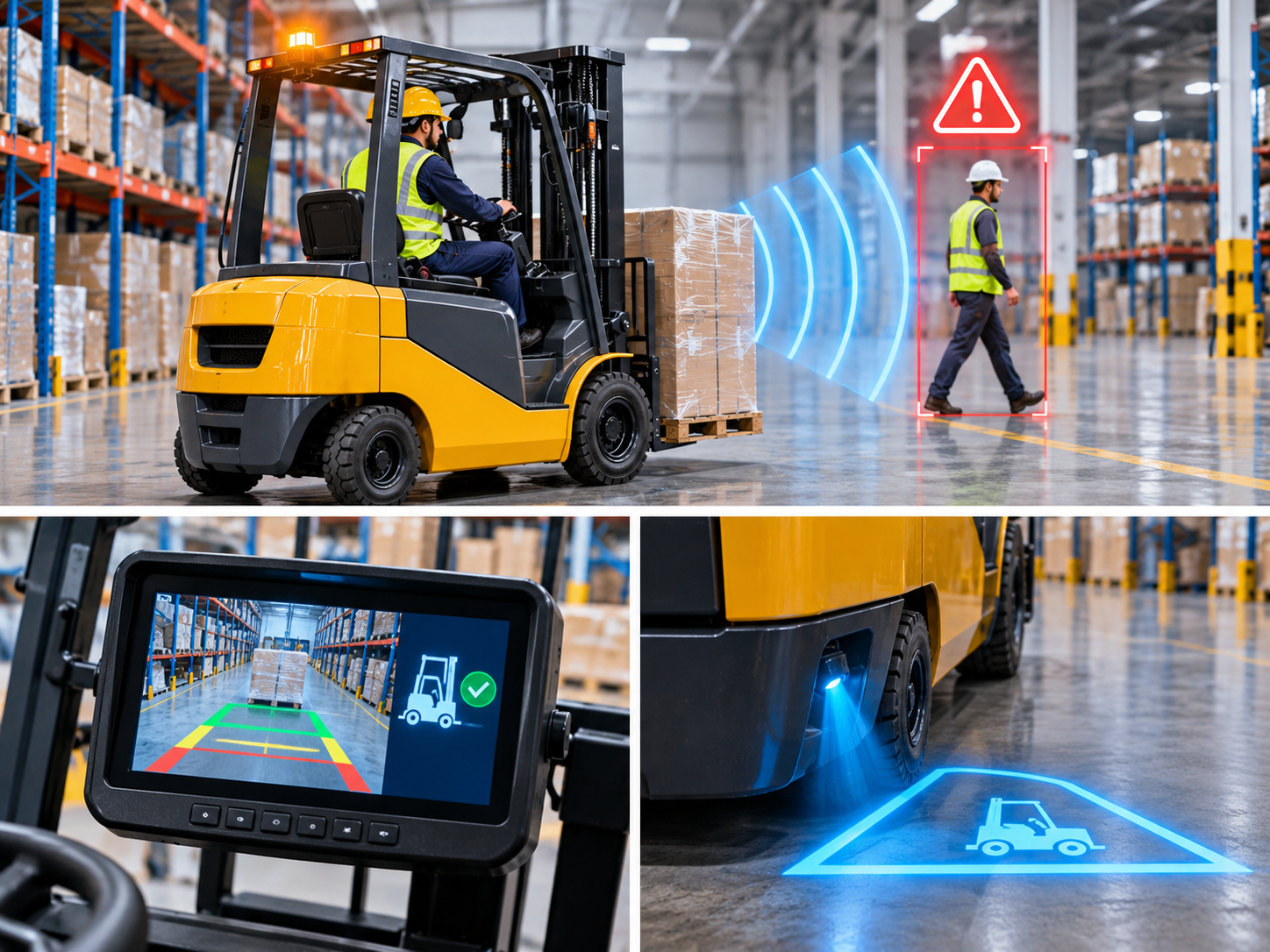
1. Smart Warehouse Forklift Solutions (Telematics & Pre-Shift Lockouts)
Paper inspection clipboards are easily pencil-whipped at the start of a busy shift, leaving worn brakes, leaking hydraulic hoses, or faulty horns undetected until an accident happens. Modern smart warehouse forklift solutions digitize vehicle accountability from the moment an operator steps onto the floor.
Using RFID badge authentication, the system verifies operator certification before enabling ignition. Operators must complete a guided digital pre-shift forklift inspection checklist (EVIR) on a cab-mounted screen; if a critical safety defect is flagged, the truck automatically enters lockout mode and dispatches an instant maintenance ticket.
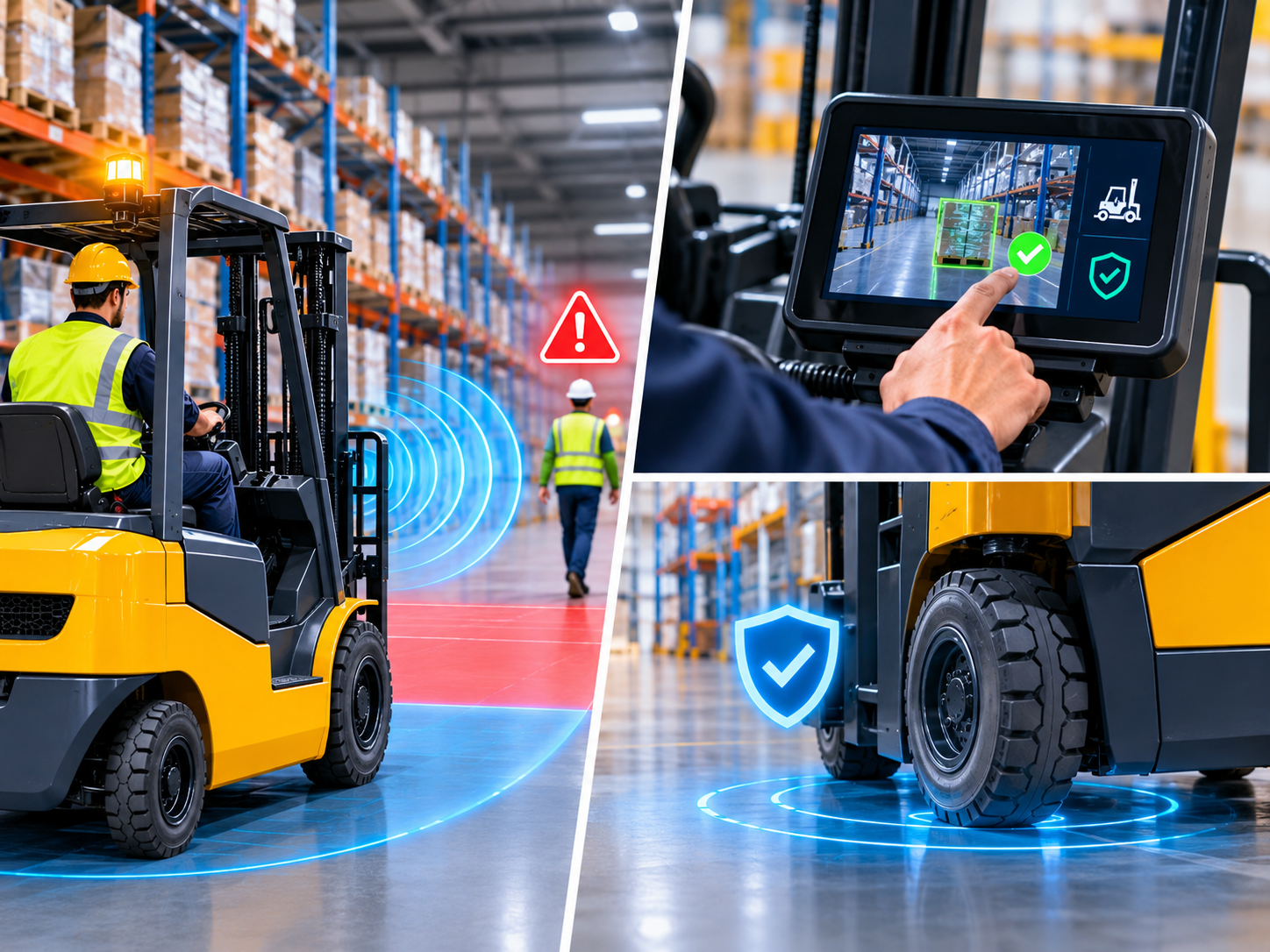
2. AI Vision Forklift Tech (Tagless Pedestrian & Obstacle Detection)
Legacy proximity warning systems require every worker, contractor, and auditor to wear an active radio transponder—creating a single point of failure whenever a badge battery dies or a visitor walks onto the dock. AI vision forklift tech eliminates wearable dependencies entirely.
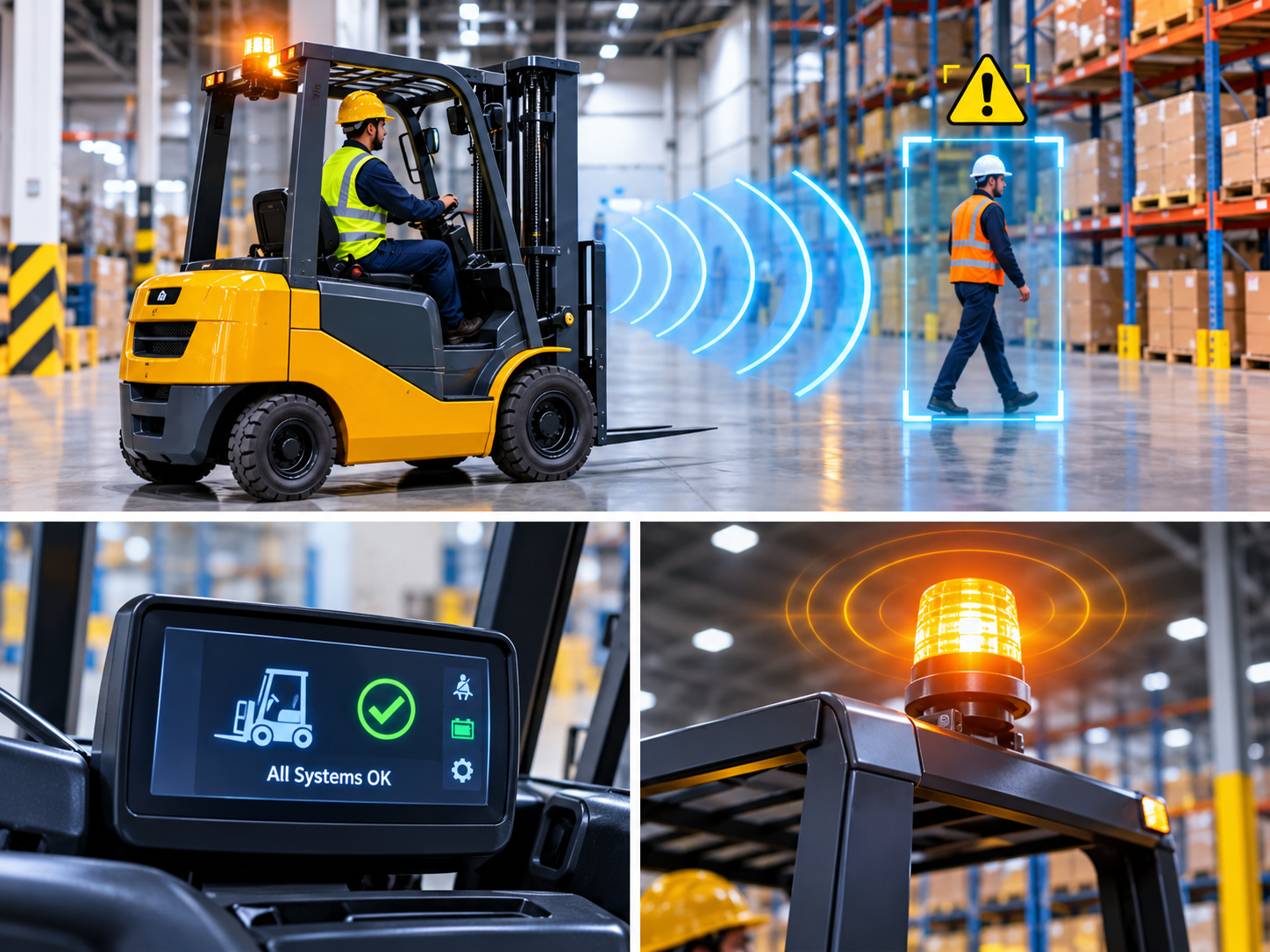
Ruggedized, wide-angle optical sensors mounted on the counterweight, mast, and overhead guard feed live video into an onboard neural processor. Within milliseconds, AI pedestrian detection cameras distinguish human silhouettes from static racking and pallets, triggering escalating cab alerts and recording high-definition near-miss clips for proactive coaching.
3. Forklift Speed Limiting Systems, Boundary Lights & OEM Retrofits
A loaded 4-ton counterbalance forklift traveling at 13 km/h (8 mph) requires nearly 13 meters to come to a complete stop. Fixed mechanical governors slow trucks down everywhere, frustrating operators and hurting pallet-per-hour productivity in open staging lanes. Intelligent forklift speed limiting systems solve this trade-off through dynamic speed capping—integrating indoor UWB zone beacons, mast-height encoders, and hydraulic load sensors to automatically cap travel speed in pedestrian walkways, cold-storage doors, and sharp turns.
Paired with high-lumen projected blue and red boundary lights that cast floor clearance halos around the chassis, these systems warn workers even in high-noise manufacturing zones. Best of all, universal 12V–80V OEM-agnostic fleet telematics kits retrofit cleanly onto Toyota, Hyster-Yale, Crown, Raymond, and Linde trucks in under an hour:
- Phase 1 — High-Risk Intersection Mapping: Audit blind rack corners, cross-aisles, and loading dock aprons using historical shock logs.
- Phase 2 — Asymmetric Zone Calibration: Configure 4–5 meter rear detection zones while tightening side detection to 1.5 meters in narrow aisles.
- Phase 3 — Weekly Telemetry Coaching: Review cloud impact heatmaps and AI video captures during weekly shift huddles.
Frequently Asked Questions on Forklift Safety Technology
Direct answers to key questions on smart forklift systems, dynamic speed capping, boundary lighting, OEM compatibility, and safety ROI:
What are the top safety technologies currently adopted for forklifts?
Computer-vision AI camera sensors, electronic access/pre-shift control, automated geo-fenced speed limiters, telematics shock sensors, and laser guidance lines.
What is dynamic speed capping technology for industrial trucks?
Telematics and radar integration that automatically caps maximum travel speed based on internal facility zones, detected load weight, or corner turning angles.
How do projected blue and red boundary lights work?
High-intensity LEDs cast focused beams or halos on the floor, visually marking the vehicle’s clearance safety perimeter for nearby workers.
Are forklift safety systems compatible with all forklift brands?
Most modern third-party smart safety and telematics platforms are universal and can be retrofitted onto electric, diesel, or LPG models from major OEMs.
What ROI can companies expect from investing in forklift safety technology?
Typical returns stem from lower equipment damage, reduced inventory write-offs, lower workers’ comp insurance premiums, and reduced legal/OSHA exposure.