
Implementing AI-Driven Collision Avoidance in 2026
The landscape of industrial safety in the United States is undergoing a seismic shift. As of May 2026, the integration of Artificial Intelligence into warehouse safety equipment has moved from “emerging tech” to a standard operational requirement.
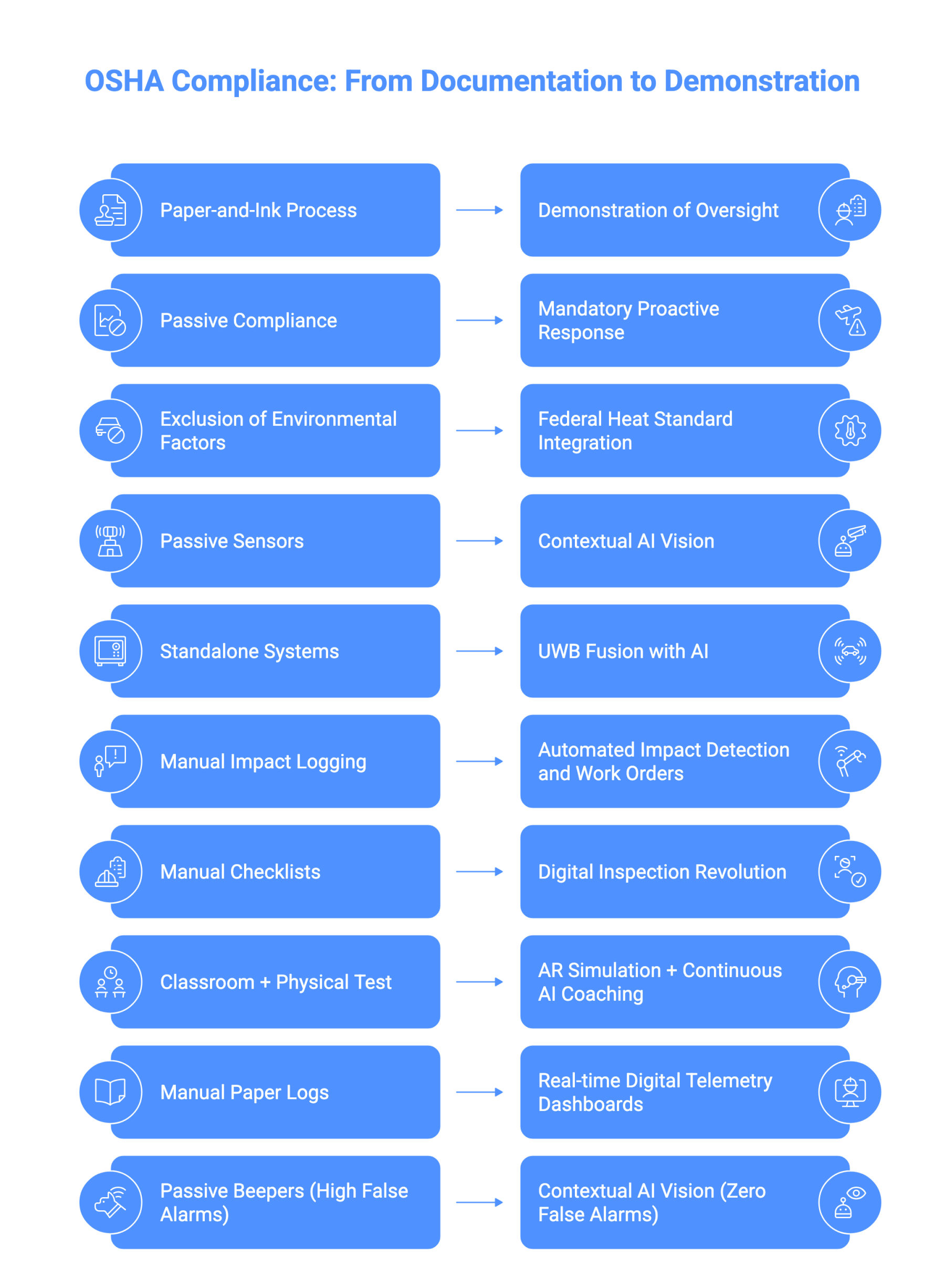
In previous years, OSHA compliance was largely a “paper-and-ink” process. You showed your training logs, and you were deemed compliant. In 2026, OSHA has shifted to a “Demonstration of Oversight” model. This means inspectors are no longer just looking at your files; they are looking at your forklift monitoring system data to see if you actually intervened when an operator was speeding.
Under the updated 2026 guidelines, facilities must show a proactive response to leading indicators. If your telematics show a “near-miss” hotspot at the corner of Aisle 4, and you haven’t adjusted the traffic flow or coached the operators in that zone, you are now liable for “Willful Negligence.”
As of May 2026, the Federal Heat Standard is in full effect. This is the latest news that most competitors are missing: warehouse safety now includes environmental monitoring. Modern systems are now being integrated with predictive analytics to automatically slow down forklift speeds or force mandatory operator breaks when the heat index reaches a critical threshold.
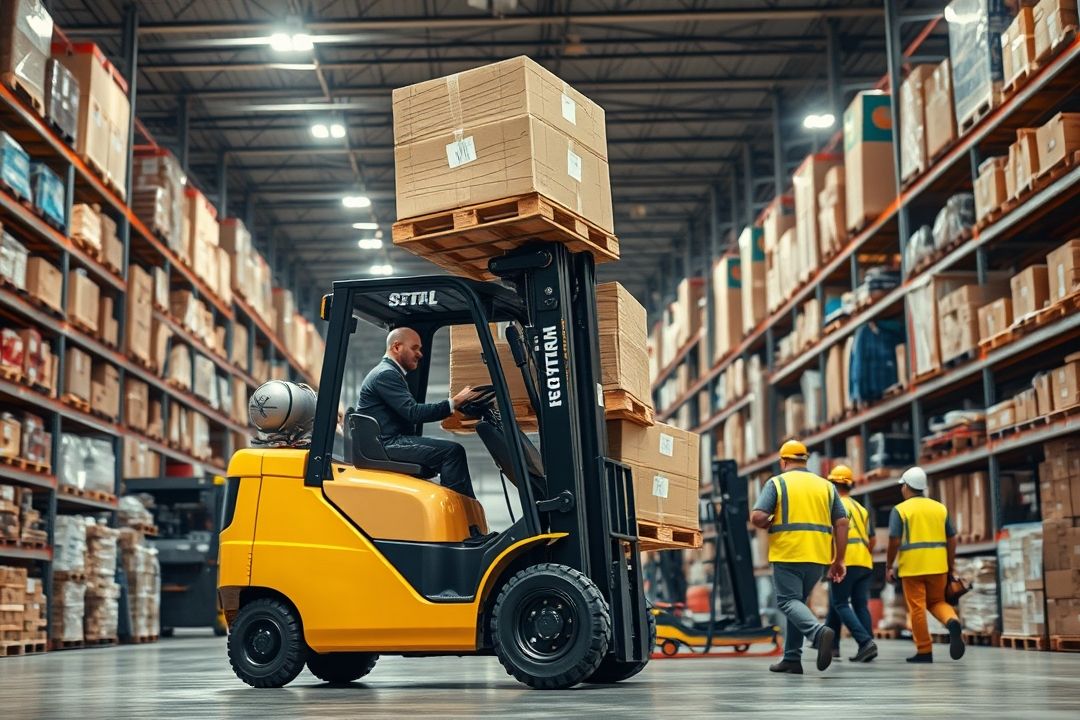
The biggest frustration for warehouse operators has always been “alarm fatigue.” When a proximity sensor beeps at every wall and pallet, the operator eventually tunes it out. This is where AI-driven pedestrian detection is changing the math.
1. Contextual AI Vision vs. Passive Sensors
The 2026 standard for forklift pedestrian safety involves AI that can differentiate between a human and an object. Unlike passive sensors, AI Vision identifies the skeletal structure of a person. If a worker is walking toward the forklift, the system triggers a “Critical Alert.” If the worker is standing safely behind a barrier, the system remains silent. This reduction in false alarms is the #1 way to regain operator trust.
2. Ultra-Wideband (UWB) Fusion
A new trend for 2026 is the fusion of AI with UWB technology. While AI “sees” what is in front of the truck, UWB “sees” around corners by tracking tags on pedestrian vests. This creates a 360-degree safety bubble that is virtually impenetrable.
While moving parts get the most attention, the static infrastructure of your warehouse is equally vital to your safety culture.
A forklift impact on a rack doesn’t always cause an immediate collapse, but it weakens the “bones” of your facility. In 2026, smart forklifts are being linked to pallet racking safety protocols. If an impact occurs, the forklift’s internal sensors log the force and location, automatically generating a work order in your service management software.
“Pencil-whipping” (faking safety checks) is the leading cause of mechanical failure accidents. By transitioning to a digital facility inspection checklist, you create an unalterable digital twin of your equipment’s health. In 2026, these checklists are often linked to biometric logins, ensuring the person signing off is actually the one standing in front of the machine.
| Feature | 2025 Standard (Reactive) | 2026 Standard (Proactive) |
|---|---|---|
| Operator Training | Classroom + Physical Test | AR Simulation + Continuous AI Coaching |
| OSHA Documentation | Manual Paper Logs | Real-time Digital Telemetry Dashboards |
| Pedestrian Alerts | Passive Beepers (High False Alarms) | Contextual AI Vision (Zero False Alarms) |
| Maintenance | Calendar-based (Every 6 months) | Predictive AI-based (Condition-dependent) |
| Compliance Focus | Post-Accident Investigation | Near-Miss Predictive Prevention |
Data Source: 2026 Industry Operational Shifts and Regulatory Guidelines.
The future of forklift training has moved into the digital realm. Augmented Reality (AR) allows new hires to experience a “tip-over” or a “blind-spot collision” in a 100% safe, simulated environment.
- Muscle Memory: AR builds the fast-twitch responses needed for emergency braking without risking a $50,000 piece of equipment.
- Skill Retention: Studies in early 2026 show that operators trained with AR/VR have a 40% higher retention rate of safety protocols compared to those who watched a 20-minute video.
- Recertification: Instead of every 3 years, 2026 best practices suggest “Micro-Certifications”—short, 5-minute AR sessions conducted every quarter to keep skills sharp.
Implementing AI-powered monitoring systems often meets resistance from operators who feel “watched.” To ensure a 100% humanized implementation, management must pivot the narrative:
- Safety, Not Surveillance: Explain that the AI tracks skeletal movements and machine data, not personal conversations.
- Objective Fairness: In the event of an accident, the data protects the operator by providing an objective “black box” recording of what actually happened, often proving that the operator followed protocol.
- Gamification: Use the data from your forklift monitoring system to reward the safest operators with “Safety Bonuses,” turning compliance into a friendly competition.
Pro Tip for 2026: What is the latest forklift safety technology? The latest tech is Contextual AI Vision combined with UWB Fusion, providing 360-degree pedestrian detection and predictive behavioral monitoring. To reduce warehouse accidents, implement predictive analytics to identify near-miss hotspots and transition to AR-based operator training for higher skill retention.
As we move deeper into 2026, the divide between high-performing warehouses and struggling facilities will be defined by their relationship with data. Forklift safety is no longer a hidden cost—it is a measurable metric of operational efficiency. By integrating AI Vision, predictive maintenance, and digital checklists, you aren’t just avoiding an OSHA fine; you are building a resilient, future-proof logistics engine.
The math is simple: fewer accidents lead to lower insurance premiums, higher employee retention, and zero “surprise” downtime. In the world of modern warehousing, safety is the ultimate competitive edge.
A: AI identifies human shapes and predicts movement patterns, allowing for “Active Braking” or alerts that only trigger when a person is truly in danger, eliminating the noise of traditional sensors.
A: While paper is still “legal,” OSHA’s new Behavioral Monitoring standards make it nearly impossible to prove compliance without digital telemetry (such as mandatory behavioral tracking, technology-assisted recertification, and compliance with the Federal Heat Standard).
A: Yes! Most forklift pedestrian safety systems are “bolt-on” solutions that can be retrofitted to any make or model of forklift.
A: Most facilities see a full ROI within 14–18 months through a 35% reduction in accidents, lower insurance costs, and a 20% decrease in mechanical downtime.
A: By using sensors integrated into your service management software to monitor warehouse temps and automatically adjust work-rest cycles for operators.