
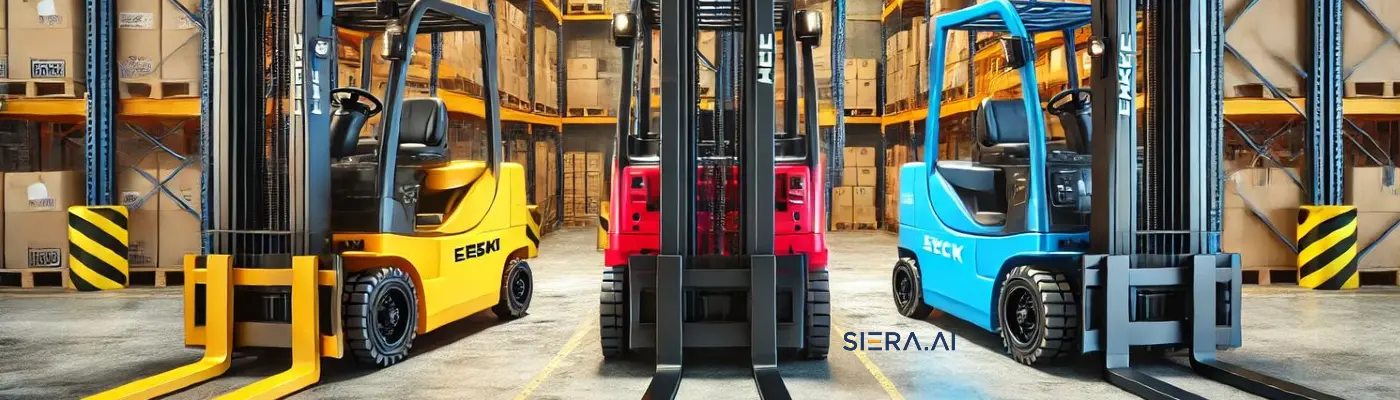
During peak season, third-party logistics (3PL) hubs and retail fulfillment facilities routinely double their fleet activity and onboard waves of temporary personnel.
The sudden influx of mixed material handling equipment (MHE) and tight shipping deadlines transforms busy docks into high-hazard operational zones.

1. Leading Causes of Forklift Collisions During Peak Surges
Field telemetry from high-velocity fulfillment facilities reveals that forklift collision rates climb by 34% between October and January. This increase stems from operational bottlenecks, tighter aisle margins, and elevated pedestrian congestion across cross-dock staging areas.
|
Operator Stress & Navigation Severe Driver Fatigue & Overtime Stress: Extended 10-to-12-hour shifts diminish operator reaction times and degrade situational awareness during high-velocity pick runs. Layout Unfamiliarity: Temporary operators frequently misjudge turning radii around staging end-caps and overhead infrastructure in unfamiliar facility layouts. |
Traffic Chokepoints & Quotas Blind-Spot Navigation Failures: Pallet overflow creates temporary obstruction zones near pedestrian crossovers and charging lanes, blinding drivers at blind intersections. Rushing Pick Rates: Aggressive fulfillment quotas incentivize hazardous driving habits, including rolling stops, driving with elevated loads, and failure to honk at aisle intersections. |
2. OSHA Certification Compliance & 3. Mixed-Fleet Speed Enforcement
OSHA Standard 29 CFR 1910.178(l) Mandate for Temp Drivers
Staffing agency credentials alone do not satisfy federal regulatory mandates. Under OSHA Standard 29 CFR 1910.178(l), the host facility holds legal responsibility for certifying that every temporary operator is competent to operate equipment safely in that specific operating environment.
- Formal Instructional Verification: Validate classroom instruction covering equipment balance, stability triangles, and hydraulic capacity ratings.
- Site-Specific Practical Training: Train seasonal drivers on facility floor conditions, narrow-aisle clearance limits, dock transitions, and overhead rack configurations.
- Hands-On Performance Evaluation: Conduct supervised evaluations of the driver operating the exact vehicle model on site.
Paper checklists often get pencil-whipped during rapid surge hiring. Implementing digitized, authenticated access controls prevents uncertified temporary drivers from starting any machine until their site evaluation record is logged and active.
Enforcing Speed Limits Across Mixed Fleets (Class I – Class III)
Mixed fleets comprising varying equipment ages, OEMs, and vehicle types present major traffic management hurdles. Uniform traffic safety requires mechanical and software enforcement rather than visual floor signage alone:
- Electronic Throttle Governors: Cap mechanical travel speeds at 5–6 mph (8–10 km/h) on internal facility thoroughfares and 3 mph in designated dock areas.
- Geofenced Vision Telemetry: Leverage retrofitted AI safety units that automatically detect vehicle entry into pedestrian-dense picking aisles and apply dynamic travel throttles.
- Audible & Visual In-Cab Coaching: Trigger progressive audio-visual buzzer warnings whenever an operator exceeds pre-programmed zone velocity limits.
4. Mitigating Driver Fatigue, Aggressive Cornering & 5. Telemetry Metrics
STABILITY TRIANGLE DYNAMICS
Front Axle Left Wheel |
Corner collisions and tip-overs remain a significant source of critical warehouse incidents. Elevated loads shifting during high-speed cornering can easily compromise a lift’s lateral stability triangle. Automate Lateral G-Force Detection: Track lateral chassis sway using multi-axis accelerometer sensors to flag aggressive turns that approach rollover thresholds. Establish Staggered Micro-Breaks: Implement mandatory 10-minute breaks every two hours during extended holiday shifts to reset driver mental sharpness. Active Blind-Corner Radar & Mirrors: Pair convex blind-corner dome mirrors with motion-triggered LED floor projection systems at cross-aisles. Leading EHS directors monitor operational telemetry to detect leading indicators of incidents before they escalate into injuries, equipment downtime, or rack collapse. |
| Metric Category | Telemetry Signal Tracked | Safe Threshold | Immediate Corrective Action |
|---|---|---|---|
| Pedestrian Proximity | AI Vision Proximity Alerts (<3m) | < 2 events / shift | Re-route pedestrian pathway; operator coaching |
| Micro-Impact Shocks | 0.8G – 1.5G Chassis Accelerations | 0 events / week | Inspect rack uprights; inspect surface joints |
| Critical Impacts | > 1.5G Severe Vehicle Impacts | 0 events | Automatic vehicle lockout; manager inspection |
| Deceleration Profiles | Hard Brake Trigger Events | < 3 events / shift | Investigate blind-corner routing & speeding |
| Inspection Velocity | Pre-Shift Inspection Timestamp | > 180 seconds | Flag fast/skipped digital checklist audits |
6. The 7 Rules for Managing Peak Season Warehouse SurgesRule 1: Replace Paper Logs with Biometric Digital InspectionsPaper checklist books fail audits and permit dangerous equipment use. Transition to digital pre-shift inspection systems that lock out unauthorized drivers and mandate step-by-step equipment health checks. Rule 2: Enforce the 3-Meter Pedestrian Exclusion RadiusEstablish clear physical separation between human pickers and moving equipment. Complement floor tape with active AI pedestrian-detection cameras that alert both the operator and pedestrian whenever safety buffers are breached. Rule 3: Re-Certify Every Temp Driver on Your Facility FloorNever accept a third-party certificate at face value. Complete and log hands-on operating evaluations across your exact cross-dock ramps and rack aisles before issuing vehicle access badges. Rule 4: Geofence Loading Docks and Pedestrian IntersectionsSegregate heavy counterbalanced operations from parcel assembly zones. Designate one-way travel loops and assign dedicated pedestrian walkways protected by physical steel bollards. Rule 5: Set Instant Shock Lockouts for Heavy ImpactsWhen an impact occurs, eliminate guesswork. Modern telemetry systems must immediately drop vehicles into limp mode following an impact exceeding 1.5G, requiring supervisor badge sign-off to resume operations. Rule 6: Track and Intervene on Near-Miss Trend HotspotsAggregate near-miss alert clusters on a central facility map. High concentrations of proximity warnings pinpoint hazardous pallet over-stacking or poor aisle lighting that demand immediate physical adjustments. Rule 7: Build Daily Micro-Coaching Loops Around Telemetry DataAvoid waiting for end-of-month reviews. Use daily automated telemetry scores to conduct 3-minute shift-start safety huddles, coaching temporary drivers on safe cornering, speed, and braking habits. |

7. Peak Season 3PL Checklist [ ] Fleet Safety Audit: Audit Class I–V forklifts for operational warning lights, alarms, and horns.
[ ] OSHA 1910.178 Sign-off: Verify site-specific practical evaluations for 100% of temp drivers.
[ ] Speed Limiting: Program dynamic speed limits and geofences across mixed OEM machinery.
[ ] Clear Blind Spots: Clear overflow pallets at aisle end-caps and transfer lanes.
[ ] Calibrate Sensors: Test telemetry shock sensors and pedestrian-detection cameras.
[ ] Digital Handoffs: Mandate digital pre-shift checks for battery, tire, and brake health.
Surge Volume Impact +34%
Forklift collision spike between Oct & Jan
> 1.5G
Critical chassis shock threshold for lockout
3 Meters
Active pedestrian exclusion safety zone
|
Protect Your Warehouse During Peak Surge Volumes
Discover how SIERA.AI’s machine-vision cameras, telemetry tracking, and digital checklists safeguard your temporary and permanent workforce.
Explore Related Solutions
→ S2 & S3 Pedestrian Detection Safety Systems
About the Author
Ram Kumar, Chief Executive Officer at SIERA.AI, has spent 10 years working with forklift dealerships on fleet studies, service department workflows, and telematics rollouts. Connect on LinkedIn.