
Vision-AI pedestrian detection vs. enterprise fleet telematics — which one actually fits your warehouse?
SIERA.AI and iWAREHOUSE are both forklift telematics platforms, but they’re built for different priorities. SIERA.AI leads with vision-AI pedestrian detection and a fast, brand-independent retrofit, while iWAREHOUSE — from The Raymond Corporation — offers a more mature, broader telematics suite for asset cost tracking and labor management. The right choice depends on whether accident prevention or fleet-cost optimization is your top priority.
In This Article
Why Your Telematics Platform Choice Actually Matters
Every distribution center eventually hits the same wall. Paper checklists go missing, near-misses get reported informally if at all, and nobody can say with certainty which operator was driving when a rack got clipped. That’s the moment most operations teams start shopping for a telematics platform.
The problem is that “forklift telematics” isn’t one product category — it’s several, wearing the same label. Some systems are built primarily to stop a forklift hitting a person. Others are built primarily to tell you what a fleet costs to run. A handful try to do both reasonably well.
SIERA.AI and iWAREHOUSE sit on opposite ends of that spectrum, which is exactly why they get compared so often. SIERA.AI is a vision-AI safety company first, with telematics layered on top. iWAREHOUSE, built by The Raymond Corporation, is a long-established fleet and asset management suite with impact alerts and access control built in.
Neither label is a knock. It just means the “right” platform depends heavily on what’s actually driving your search — a string of near-misses, an OSHA citation, a maintenance budget that’s spiraling, or a Raymond dealer relationship you’re trying to extend or replace.
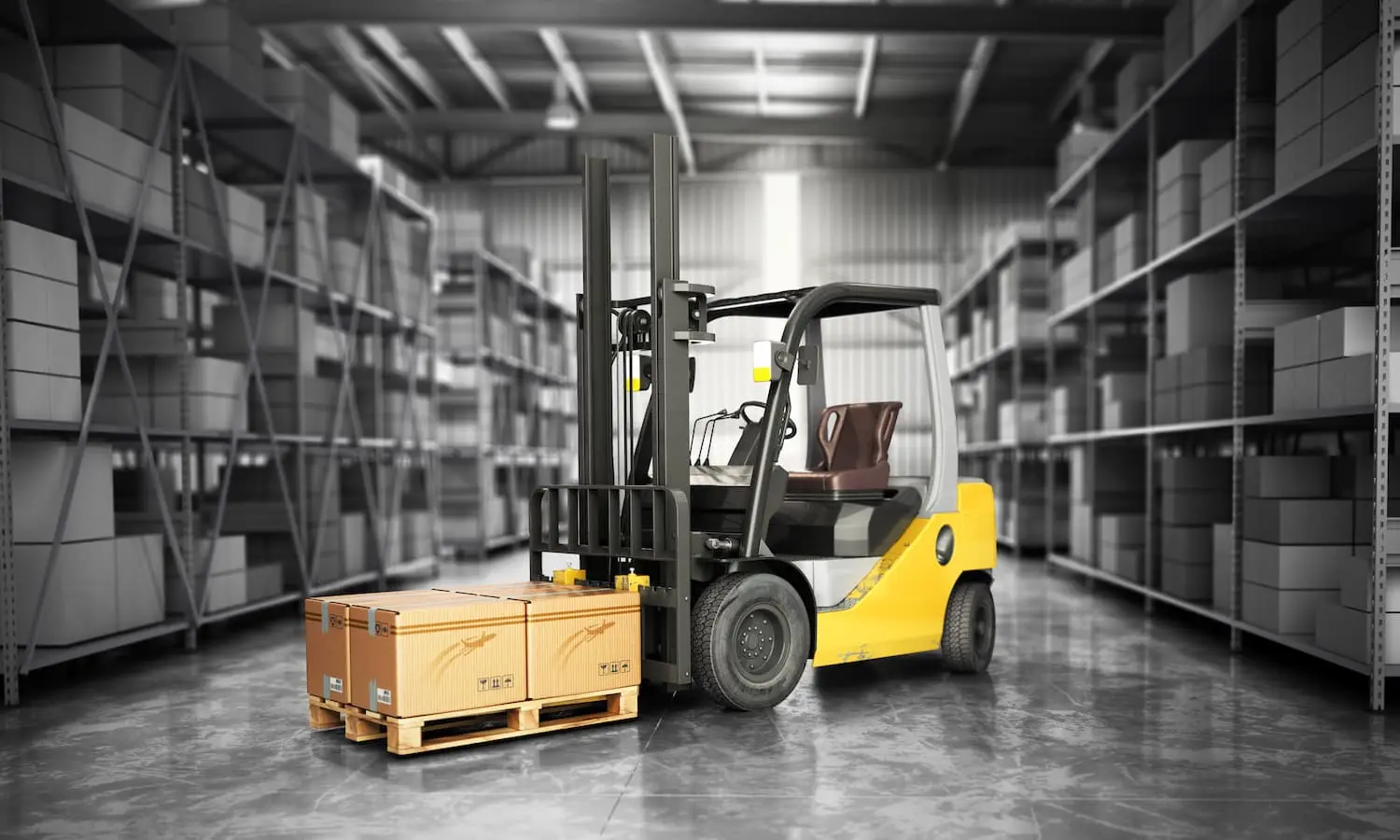
Shared aisles between forklifts and foot traffic are where most preventable accidents start.
Tired of guessing which forklifts are putting your team at risk?
See how vision-AI pedestrian detection works — no RFID tags, no rewiring, no special equipment.
SIERA.AI at a Glance
SIERA.AI, built by Austin-based Stocked Robotics, Inc., centers its product around the S3 Pedestrian Detection System — a camera-based unit that uses deep learning to tell the difference between a person and an inanimate obstacle in real time.
There’s no RFID tags, wearables, or floor infrastructure required. The cameras scan the area around the truck roughly every 30 milliseconds and trigger audio and visual alerts inside configurable distance zones, whether that’s 8 inches or 99 inches out.
Because it’s a vision-based retrofit rather than a factory-installed system, SIERA.AI advertises that it installs on Class I through Class V trucks — gas, electric, or LP — regardless of brand, typically in under 30 minutes.
| SIERA.AI Component | What It Does |
|---|---|
| S3 Safety System | Vision-AI pedestrian and object detection with audio/visual alerts |
| Forklift Lock-Out | Badge or PIN-based access control, remote start/shutdown |
| Digital Inspection Checklists | Pre-shift checks replacing paper, with failure alerts |
| Telemetry Dashboard | One portal for impacts, near-misses, safety scores, and inspection data |
SIERA.AI also publishes some sizable usage numbers from its installed base — over 1.6 million incidents tracked in 2023 and more than 40 million data points collected the same year, according to figures on its own site. Customers like 3M, John Deere, Grainger, DB Schenker, and Geodis are listed among its clientele.
iWAREHOUSE at a Glance
iWAREHOUSE comes from The Raymond Corporation, part of the Toyota Material Handling group — one of the oldest and largest names in forklift manufacturing. The platform has been refined for roughly two decades and is now sold as iWAREHOUSE Evolution, a tiered system that scales from “Essential” features up to “Enterprise.”
Where SIERA.AI is built around a single core technology, iWAREHOUSE is closer to a suite. Data flows through the iWAREHOUSE Gateway web portal, with sub-modules handling different jobs: iTRACK for maintenance and cost-of-ownership data, iMetrics for usage benchmarking, and iAlert for automated service notifications.
| iWAREHOUSE Component | What It Does |
|---|---|
| iWAREHOUSE Gateway | Central web dashboard for fleet and operator data |
| iTRACK | Asset maintenance tracking and true cost-of-ownership reporting |
| iMetrics | Usage and utilization benchmarking across trucks and shifts |
| Access control & checklists | Badge/PIN vehicle access, electronic operator checklists |
| Fieldsense / ObjectSense (2026) | Newer add-on proximity and object-detection hardware |
It’s worth noting that iWAREHOUSE was historically associated with Raymond-brand trucks, but Raymond now markets it as working with any lift truck and any fleet size — mixed-brand included. At MODEX 2026, Raymond also introduced iWarehouse Fieldsense (magnetic-field-based proximity alerts) and ObjectSense (camera/sensor object detection with slowdown capability) as newer additions, narrowing the safety-tech gap with vision-AI competitors.
Side-by-Side Comparison Table
| Category | SIERA.AI | iWAREHOUSE |
|---|---|---|
| Maker | Stocked Robotics, Inc. (Austin, TX) | The Raymond Corporation (Toyota Material Handling) |
| Core technology | Vision AI / deep learning camera system | Telematics hardware + web-based fleet software |
| Pedestrian detection | Built into the core platform (S3) | Newer add-on hardware (Fieldsense/ObjectSense) |
| Fleet compatibility | Brand-independent; Class I–V, any fuel type | Any brand per Raymond; deepest integration on Raymond trucks |
| Install time | Typically under 30 minutes per truck | Varies; often dealer-installed, can be longer |
| Maintenance/cost tracking | Basic, via dashboard | Deep — purpose-built modules (iTRACK, iMetrics) |
| Labor management | Not a core feature | Available as an add-on (LMS) |
| Company maturity | Newer entrant, safety-tech focused | ~20 years in market, broad enterprise footprint |
| Best documented strength | Proactive collision prevention | Fleet-wide cost and utilization data |
Where Each Platform Has the Edge
SIERA.AI
If accident prevention is the reason you’re reading this, SIERA.AI’s core pitch is hard to ignore: pedestrian detection isn’t an add-on you buy separately — it’s the product. That speed and simplicity tends to drive how fast a safety system actually gets used fleet-wide, not just on a pilot truck.
Brand-independence is also a real win for mixed fleets — Toyota, Crown, Hyster, Raymond, all on one dashboard. For EHS managers facing recurring near-misses or an OSHA citation under 29 CFR 1910.178, catching pedestrians before contact addresses the root gap directly.
iWAREHOUSE
iWAREHOUSE’s strength shows once the conversation moves from “did anyone get hurt” to “what is this fleet costing us.” Two decades of refinement built iTRACK and iMetrics specifically to right-size a fleet and track true cost of ownership truck by truck.
If you already run a Raymond fleet or lean on a Raymond/Toyota dealer for service, that integration depth and relationship can outweigh a newer entrant’s tech edge — plus a labor management module SIERA.AI doesn’t directly target.
Which One Should You Choose?
There’s no universal winner here — only a better fit for what’s actually driving your search.
| Stopping pedestrian-forklift collisions fast | SIERA.AI |
| Mixed-brand fleet, no OEM lock-in | SIERA.AI |
| Fast retrofit with minimal downtime | SIERA.AI |
| All-in-one safety + telematics on a budget | SIERA.AI |
| Deep cost-of-ownership and utilization data | iWAREHOUSE |
| Existing Raymond/Toyota dealer relationship | iWAREHOUSE |
| Labor management alongside equipment data | iWAREHOUSE |
| Enterprise-tier scalability across many sites | iWAREHOUSE |
Many operations run a system like SIERA.AI for frontline safety and pair it with broader ERP or maintenance software for cost data — the two priorities aren’t always mutually exclusive, even if one platform leans harder into one than the other.
Not sure which platform fits your fleet?
Talk to a SIERA.AI specialist — a straight answer based on your truck mix and facility size, no pressure.
Switching From iWAREHOUSE: What to Know
If you’re specifically researching an iWAREHOUSE alternative — rather than comparing fresh — it’s usually one of three triggers: pedestrian safety gaps the current setup doesn’t close, a desire to break free of OEM-tied hardware, or dissatisfaction with implementation speed on a growing or mixed fleet.
A few practical things to confirm before switching any telematics vendor:
- Data portability. Can historical inspection and impact data be exported in a usable format, not just viewed in a legacy dashboard?
- Parallel run period. Most safety-tech vendors, SIERA.AI included, support running alongside an existing system briefly rather than a hard cutover.
- Per-truck vs. fleet-wide pricing. The math changes significantly at scale.
- Hardware ownership. Some telematics hardware is leased and tied to specific trucks.
Neither company publishes list pricing, so a tailored quote is the only way to compare real costs.
Frequently Asked Questions
Not exactly a one-to-one swap. SIERA.AI replaces the safety and inspection functions iWAREHOUSE covers, and adds vision-AI pedestrian detection as a core feature rather than an add-on. It does not currently replicate iWAREHOUSE’s deeper asset cost-of-ownership and labor management modules, so organizations relying heavily on those may need a separate tool alongside it.
Yes. SIERA.AI is marketed as a brand-independent retrofit that installs on Class I through Class V trucks — gas, electric, or LP — regardless of manufacturer, typically in under 30 minutes per vehicle.
Historically, iWAREHOUSE focused on impact alerts after contact rather than predictive detection. As of MODEX 2026, Raymond introduced Fieldsense (magnetic-field-based proximity alerts) and ObjectSense (camera/sensor detection) as newer add-on hardware, which narrows but doesn’t fully close the gap with a system where pedestrian detection is the core product.
Neither SIERA.AI nor iWAREHOUSE publishes standard list pricing publicly. Both are quoted based on fleet size, number of facilities, and which modules or hardware tiers you select.
Many operations run a new safety system in parallel with an existing telematics platform during evaluation, rather than switching all at once. Confirm with your vendor whether dashboards can coexist and whether historical data can be exported before committing to a hard cutover.
Telematics broadly refers to the data layer — tracking utilization, impacts, inspections, and maintenance across a fleet. Pedestrian detection is a specific safety function that actively monitors for people near a moving forklift. Most buyers actually need both — the question is which one you don’t want to compromise on.
Stop guessing. Start preventing.
Get a free fleet assessment and see exactly where SIERA.AI fits into your safety strategy.
Sources & References: Product information and feature data drawn from SIERA.AI’s published product pages (S3 Safety System, Telemetry Dashboard) and The Raymond Corporation’s iWAREHOUSE and iWAREHOUSE Evolution product pages; iWarehouse Fieldsense and ObjectSense details from MODEX 2026 trade coverage (DC Velocity, April 2026); National Safety Council forklift injury data, 2024. All figures current as of June 2026.