
By Ram Kumar, CEO at SIERA.AI · [Month Day, 2026] · 9 min read · Dealership Solutions · Fleet Management · Service Contracts

For most forklift dealerships, the fleet study has always been a sales tool — a walk-through of a customer’s warehouse to count trucks, check hour meters, and spot obvious wear. The dealers winning service contracts in 2026 are doing something different.
They run the same walk-through with a tablet instead of a clipboard, pulling live telematics data instead of guesses, and handing the customer a report that reads like a maintenance budget, not a sales pitch.
What Is a Forklift Dealer Fleet Study?
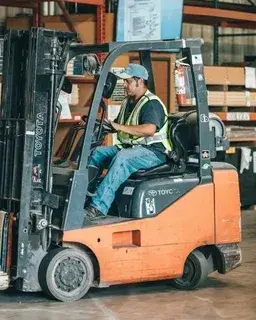
A forklift dealer fleet study is a structured audit of every powered industrial truck on a customer’s site. A service or sales rep walks the floor and logs each unit’s make, model, hour-meter reading, condition, and maintenance history.
That snapshot is then compared against the fleet’s actual workload. The output is one document that shows which trucks are healthy, which are overdue for service, and which now cost more to keep running than to replace.
In short: a fleet study is the diagnostic. The service contract is the prescription. Dealers who skip straight to the proposal — without the diagnostic — are asking a customer to trust a number they can’t see.
Why it’s different from a one-time inspection: a routine inspection checks one truck against a safety checklist on a single day. A fleet study looks at the whole fleet at once, and it keeps producing data after the first visit — which is exactly what makes it useful for renewals, not just new business.
The Five Lifecycle Stages a Good Fleet Study Should Track
A fleet study earns its place on a customer’s calendar when it answers questions across the full life of the equipment, not just whether a truck starts.
Acquisition
New, used, or rent-to-purchase — does status match what the customer thinks they own?
Deployment
Which part of the facility is the truck working in, and is it matched to that job?
Utilization
How heavily and efficiently is the truck actually run, based on real hours?
Maintenance
Is the unit on a planned-maintenance schedule? What’s already been repaired?
Disposal
Is the dealer spending more to keep it alive than the customer would pay to replace it?
Run those five questions across an entire fleet and the proposed changes can number in the hundreds. The value of dealership telematics is being able to drill from that fleet-wide view down to one truck, instantly, when a customer asks “show me.”
How Forklift Dealership Telematics Turn Raw Data Into a Sales Tool
A digital fleet study being captured on-site — no paper, no re-keying.
Paper checklists die the day they’re filled out. A clipboard count from March tells a customer nothing in October, and it certainly doesn’t tell the service department which truck to schedule next week.
Forklift dealership telematics replace that single snapshot with a live feed. Digital forms capture the fleet study data once, in the cloud, instead of on paper that has to be re-keyed before anyone can act on it. From there, the same platform can generate the reports a service department actually runs on:
Asset Ledgers
Track every truck’s status against all five lifecycle stages.
Hour-Meter Logs
Pulled directly from the equipment, not estimated from memory.
Maintenance Reports
Flag overdue planned maintenance before it becomes a breakdown.
OSHA Inspection Records
Doubles as documentation if a customer’s insurer ever asks.
None of that requires new trucks. Telematics retrofits onto an existing mixed fleet, which matters most for the customers a fleet study is usually run on — the ones who never bought into one OEM and now have five brands on the floor.
Paper Fleet Study vs. Telematics-Enabled Fleet Study
The gap between the two approaches isn’t about effort. It’s about what the report can still do for the customer a week after the visit.
| Factor | Paper-Based Fleet Study | Telematics-Enabled Fleet Study |
|---|---|---|
| Data source | ✘ Tech notes, customer recall, handwritten logs | ✔ Live hour-meter, impact, and inspection data |
| Time to complete | ✘ Days to weeks per site | ✔ Hours, captured during the walk-through |
| Accuracy | ✘ Subject to transcription errors, stale logs | ✔ Time-stamped and tied to the asset record |
| Sales follow-up | ✘ Static PDF, often shelved after the visit | ✔ Live dashboard, reopened in the next call |
| Contract justification | ✘ Hard to defend cost without hard numbers | ✔ Quantified downtime, repair cost, utilization |
| Renewal value | ✘ Goes stale the day it’s printed | ✔ Keeps updating for current renewal data |
From Findings to Signature: Turning a Fleet Study Into a Service Contract
A completed fleet study is a pile of data. A signed contract requires turning that data into a decision a customer’s operations and finance teams can both say yes to.
1. Lead with the data, not the pitch. Open with the asset ledger, not a slide deck about your dealership.
2. Put a dollar figure on downtime and aging equipment. “Overdue for service” is an opinion. “40% more idle hours and two missed PM windows” is a budget line.
3. Scope the contract around what the data showed. Planned-maintenance intervals based on real utilization, a parts kit sized to actual repair history, and a response-time commitment.
4. Offer tiers, not one option. A full-service PM contract, an inspection-only tier, and a fleet-replacement plan let different budgets say yes to something.
5. Set the next data checkpoint before you leave. A 90-day or 6-month review on the same telematics feed turns a one-time sale into a renewal that’s already half-won.
Why These Contracts Stick: Renewal, Uptime, and Recurring Revenue
Winning the first service contract off a fleet study is only half the goal. Keeping it at renewal is where dealership telematics earn their cost.
Industry analysis of the forklift market heading into the back half of this decade points the same way: parts availability, technician density, and mobile service response time now decide whether a customer renews with their current dealer — with uptime guarantees and loaner-equipment pools separating dealers from each other during peak season.
That’s exactly the data a telematics-backed fleet study produces by default. A dealer who can show actual fleet uptime, repair turnaround, and parts fill rate at renewal time is negotiating from evidence — not memory.
Analysts expect the U.S. forklift market to grow from roughly $8.85 billion in 2026 toward $13.59 billion by 2031, with telematics and lifecycle analytics increasingly described as the deciding factor — shifting the conversation from hardware specs to data-driven uptime guarantees.
Common Mistakes Dealers Make With Fleet Studies
Treating it as a one-time event. The value is in the recurring data relationship, not the single visit.
Handing over raw data instead of cost language. Hour-meter logs mean little to a CFO; downtime cost and repair-versus-replace math means everything.
Letting the study die with the sales team. If service never sees the findings, the dealership can’t deliver on what it sold.
Skipping the follow-up cadence. No scheduled checkpoint means an easy walk-away at renewal.
Ignoring the trucks that still run. The units quietly draining margin are rarely the obviously broken ones — they’re the ones still working, just at a cost nobody has measured.
Where Forklift Dealership Telematics Is Heading in 2026 and Beyond
1. Telematics is now a baseline, not an add-on. The global forklift telematics market is projected to grow at an 11.2% CAGR from 2026 through 2035, tied increasingly to predictive maintenance and stricter safety rules rather than basic location tracking.
2. OEMs are raising the bar. Several major manufacturers expanded their own cloud telematics platforms in 2026, layering digital checklists and battery analytics directly into the truck — a fleet study that only counts trucks now looks basic by comparison.
3. Electrification adds a data layer. As more fleets shift to lithium-ion power, fleet studies increasingly need battery health and charging behavior alongside the usual maintenance and utilization data — one more reason a paper clipboard can’t keep up.
Frequently Asked Questions
What is a forklift dealer fleet study?
A site-wide audit of every powered industrial truck a customer owns or rents — covering age, hour-meter readings, maintenance history, and condition — used to spot overdue service and trucks that cost more to keep than replace.
How long does a forklift fleet study take?
A paper-based study can take days to weeks depending on fleet size. A telematics-enabled study, where data is captured digitally during the walk-through, typically produces a usable report the same day.
What’s the difference between a fleet study and a routine forklift inspection?
An inspection checks one truck against a checklist on one day. A fleet study covers the whole fleet across five lifecycle stages — acquisition, deployment, utilization, maintenance, and disposal — to build a business case for a service contract.
How does dealership telematics improve fleet study accuracy?
It pulls hour-meter, impact, and inspection data directly from the truck instead of relying on memory or handwritten notes, keeping the data time-stamped, auditable, and reusable in the next sales conversation.
Can a fleet study help renew a service contract, not just win a new one?
Yes. Because telematics keeps collecting data after the initial audit, dealers can bring fresh utilization and maintenance numbers to the renewal conversation instead of relying on the original pitch.
What data should a forklift dealership track during a fleet study?
At minimum: acquisition status, deployment location, utilization rate, planned-maintenance compliance, and repair history for every unit — plus impact data and OSHA inspection results where possible.
The Data Gap Shows Up First in the Renewal Column
A fleet study is the diagnostic that justifies a service contract — not a substitute for one. Telematics turns a one-time paper audit into a recurring data relationship, which is what actually drives renewals.
If your dealership is still running fleet studies on paper, the gap between you and a telematics-equipped competitor isn’t a feature gap anymore — it’s a data gap.
Ready to Run a Telematics-Backed Fleet Study?
Get a free, custom quote — no paper checklists, no re-keying data, results from the first walk-through.
Explore Related Solutions
→ Fleet Study Data Collection — the digital tool behind this process
About the Author
Ram Kumar, Chief Executive Officer at SIERA.AI, has spent 10 years working with forklift dealerships on fleet studies, service department workflows, and telematics rollouts. Connect on LinkedIn.
Sources referenced: Mordor Intelligence (U.S. Forklift Market Report, 2026–2031), IndexBox (Global Forklift Telematics Market, 2026–2035), Research and Markets (Forklift Market Outlook, 2026–2034). Figures current as of mid-2026 — re-check against the latest report editions before each republish.