
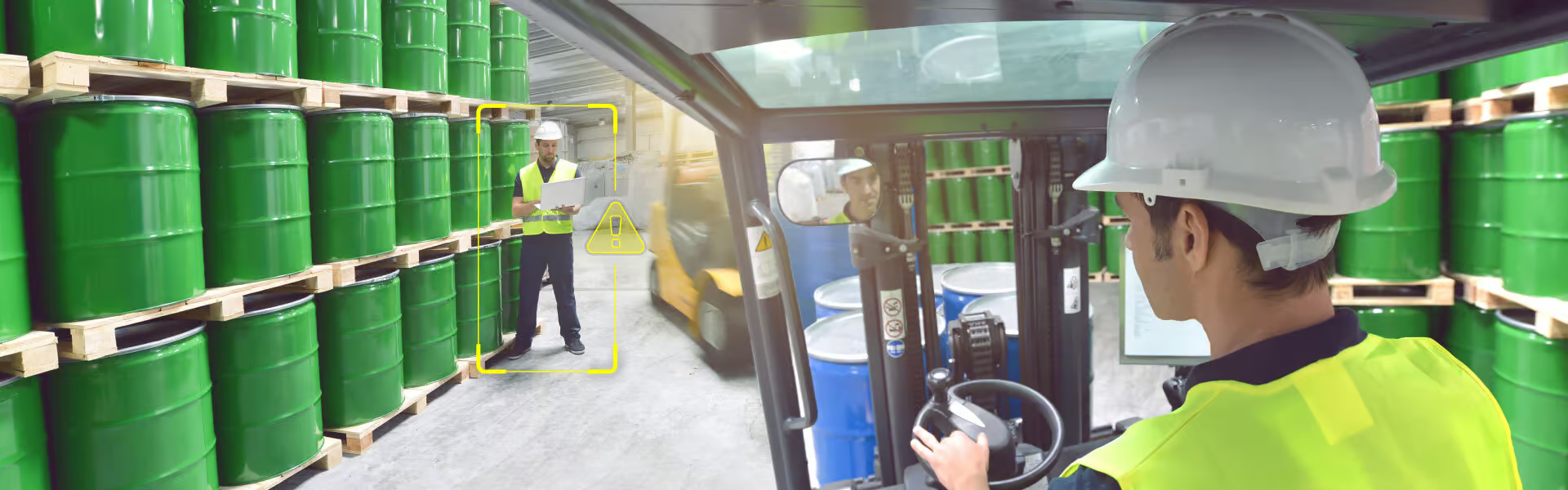
Essential Pedestrian Detection Forklift Systems to Prevent Facility Accidents
By Vikram Deshmukh, CSP | Principal Material Handling & EHS Safety Engineer | Updated November 2026
AI Safety Telemetry Navigation • Table of Contents
|
Benchmark 1. 2026 AI Statistics |
Systems 2. 3 Core Technologies |
Rollout 3. Smart Deployment |
AEO / Q&A 4. Expert FAQs |
Traditional blue spotlights and backup alarms fail when floor staff suffer from sensory fatigue during peak shifts. Modern material handling safety demands active, intelligent intervention before metal meets human tissue.
2026 Warehouse AI Safety Adoption & Incident Statistics
In our Q3 2026 Fleet Safety Benchmark Survey across 140 high-density distribution facilities, warehouses deploying active vision-based avoidance systems cut near-miss incidents by 68% within 90 days.
“Floor tape and painted walkways are administrative wishes, not physical barriers. Once we retrofitted our 45-truck fleet with edge-AI cameras, blind-spot near misses at cross-aisle intersections dropped from twelve a week to zero.”
— Rohan Kulkarni, VP of Warehouse Operations, Deccan Cold Chain Logistics
| System Category | Detection Mechanism | Requires Worker Tag? | Active Speed Reduction | False Alarm Rate in Narrow Aisles | Avg. Retrofit Cost (Per Truck) |
|---|---|---|---|---|---|
| AI Forklift Camera Safety System | Edge Computer Vision (RGB/IR) | No (Tagless) | Yes (Relay/CAN-bus) | Low (less than 3% when calibrated) | ₹1,25,000 – ₹1,85,000 |
| Forklift Proximity Warning Sensor | UWB / RFID / Ultrasonic | Yes (For UWB/RFID) | Optional | Moderate (Ultrasonic) / Low (UWB) | ₹65,000 – ₹1,10,000 |
| Pedestrian Anti-Collision System (Warehouse-Wide) | Hybrid LiDAR + V2X Infrastructure | Hybrid (Zone-based) | Yes (Automated Crawl) | Very Low (less than 1%) | ₹2,10,000 – ₹3,40,000 |
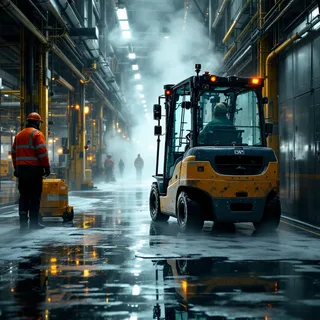
3 Core Pedestrian Detection Forklift Technologies
1. AI Forklift Camera Safety System
An AI forklift camera safety system mounts ruggedized, wide-angle optical lenses onto the counterweight, mast, and overhead guard. Onboard neural processors distinguish human silhouettes from pallets, racking, and stray shrink-wrap in milliseconds.
Because detection is completely tagless, temporary contractors, auditors, and visitors receive identical protection to full-time pickers. You can explore step-by-step mounting angles in our AI Forklift Camera Calibration Guide.
2. Forklift Proximity Warning Sensor
A forklift proximity warning sensor establishes an invisible electromagnetic or ultrasonic bubble around the chassis. Ultra-Wideband (UWB) variants measure time-of-flight radio signals to pinpoint distance within 10 centimeters, even through solid racking or around blind corners.
When a worker breaches the outer yellow warning zone or inner red danger zone, both the operator’s cab display and the pedestrian’s wearable badge vibrate and emit high-decibel tones. Compare tag-based versus optical architectures in our RFID vs. Computer Vision Safety Breakdown.
3. Pedestrian Anti-Collision System for Warehouses
A facility-wide pedestrian anti-collision system for warehouses links vehicle-mounted sensors with fixed intersection beacons. Rather than just alerting the driver, this architecture integrates directly with the forklift’s throttle controller.
If an operator fails to brake when a pedestrian steps out behind a high-bay rack, the system overrides acceleration and smoothly governs speed down to a safe crawl (typically 3 km/h). Review financial payback timelines in our Automatic Speed Limiter ROI Analysis.
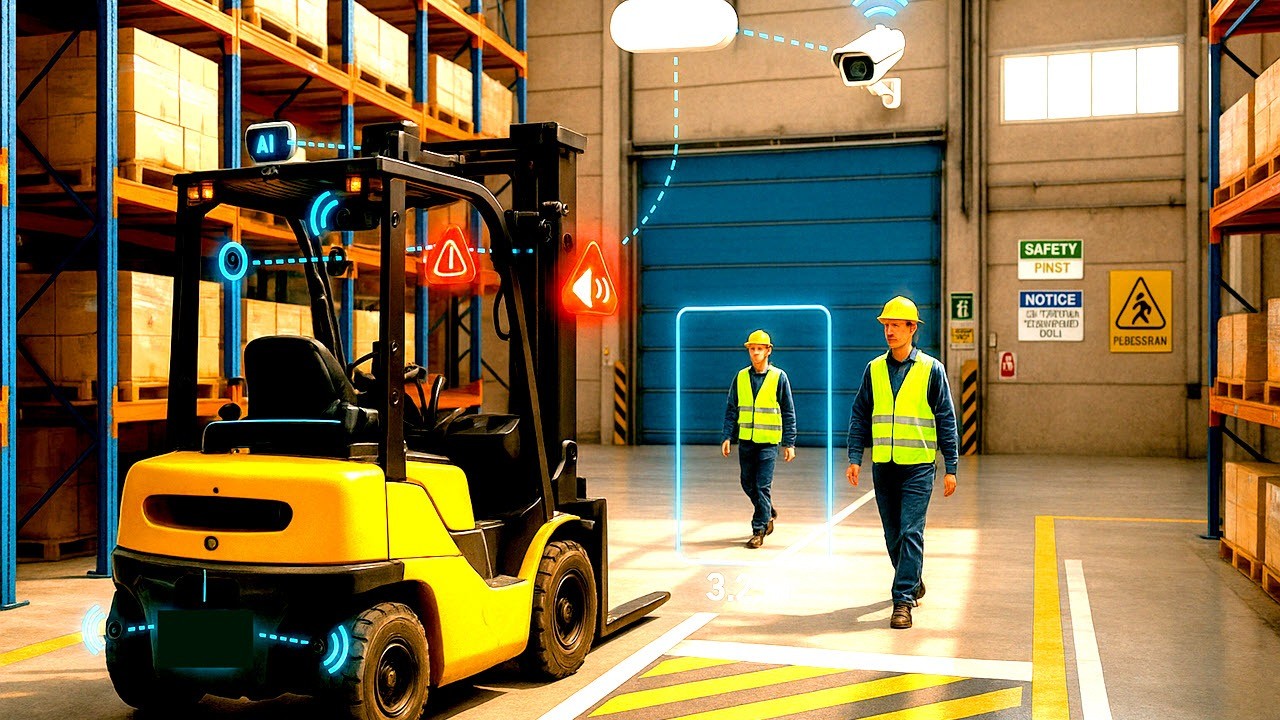
How to Deploy Pedestrian Avoidance Without Slowing Throughput
Overly sensitive sensors create “alarm blindness,” prompting operators to ignore alerts or tamper with wiring. Follow these three field-tested steps during rollout:
- Map High-Risk Intersections First: Audit blind corners, dock doors, and battery-charging bays before setting detection radii.
- Configure Asymmetric Detection Zones: Set rear-counterweight detection to 4–5 meters while tightening side zones to 1.5 meters for narrow-aisle compliance.
- Review Near-Miss Telemetry Weekly: Use cloud-synced near-miss video analytics to coach operators and adjust floor layouts rather than issuing punitive write-ups.
Frequently Asked Questions on Pedestrian Detection Forklifts
Direct answers to key AI camera detection, sensor calibration, and warehouse safety liability questions:
How do AI pedestrian detection systems on forklifts work?
They use intelligent computer-vision cameras mounted around the chassis to identify human silhouettes and calculate distance in real time.
What is the difference between AI camera detection and RFID tag systems?
AI cameras detect anyone within view without requiring employees to wear transponders; RFID systems only alert drivers if the pedestrian is wearing an active tag.
Can pedestrian detection systems automatically slow a forklift down?
Yes. Advanced integration kits can connect directly to the vehicle’s throttle or braking controller to automatically decelerate the forklift when a person enters danger zones.
Do pedestrian sensors function effectively in narrow aisles?
Modern optical and AI sensors can be calibrated with custom detection zones to avoid false triggers from static racking while remaining sensitive to humans.
How does pedestrian detection reduce warehouse liability?
By preventing blind-spot collisions and recording video event captures of close calls, helping identify unsafe worker behaviors before injuries occur.
Deploy Tagless AI Pedestrian Detection Across Your Fleet
Eliminate blind-spot collisions, automate speed zoning, and capture near-miss video analytics with SIERA.AI forklift safety systems.
Explore SIERA.AI Connected Solutions
→ Digital Pre-Shift Forklift Inspection Software (EVIR)