
By Ram Kumar, CEO at SIERA.AI · July 2, 2026 · 9 min read · Cold Storage · Forklift Safety · EHS
Refrigerated distribution has grown fast, driven by grocery delivery, pharmaceutical logistics, and frozen food demand. But the forklifts moving pallets through those aisles are working in one of the least forgiving environments in material handling.
A forklift operating at 68°F and one operating at -10°F are, functionally, different machines. This guide breaks down exactly why — and what a modern cold storage forklift safety program needs to look like in 2026.
|
35K–62K
Forklift injuries nationwide, every year
|
0°F
Threshold where freezer cold-stress protocols apply
|
20–30%
Battery capacity lost in sub-zero conditions
|
1.1M+
Near-miss events SIERA.AI tracked in one year
|
Why Cold Storage Forklift Safety Is Different From Standard Warehouse Safety
|
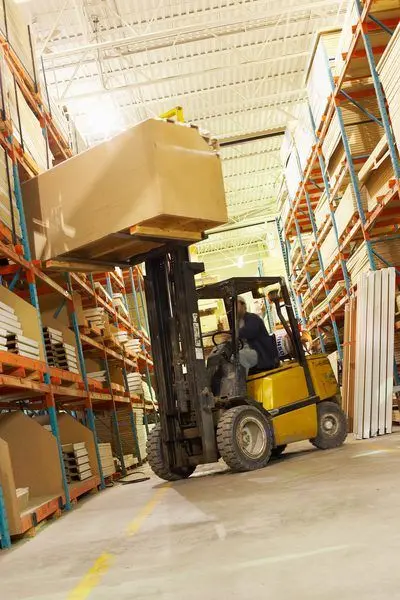
Cold changes how hydraulic fluid flows, how tires grip, how batteries discharge, and how quickly a human body loses coordination. Freezer warehouse safety isn’t a colder version of standard warehouse safety — it’s a distinct risk category. It stacks environmental hazards — ice, fog, numbness, poor lighting — directly on top of the hazards that already make forklifts one of the most dangerous pieces of equipment in any facility. Nationally, forklifts cause between 35,000 and 62,000 injuries every year, and tip-overs alone account for roughly a quarter of all forklift accidents. In a sub-zero facility, every one of those baseline risks gets amplified by the cold itself. |
The Core Sub-Zero Hazards Operators Face
Four factors compound each other inside a freezer — and each one on its own is already a leading cause of forklift incidents in ambient warehouses.
|
🧤
Reduced Dexterity |
🌫️
Fogged Visibility |
🧊
Slippery Floors |
🔋
Battery & Hydraulic Drag |
Operators working four-hour blocks in a freezer are also managing early-stage cold stress — shivering, stiffness, and mental fatigue — long before symptoms become obvious to a supervisor.
See Cold Storage Forklift Safety in Action
Watch how AI-powered pedestrian detection performs inside a freezer aisle — fogged sensors, low light, and all.
What OSHA Says About Freezer Warehouse Safety
OSHA does not set one exact temperature limit for refrigerated workplaces. Instead, cold storage facilities are regulated under the General Duty Clause, which requires employers to keep the workplace free of recognized hazards — including cold stress — that could cause serious harm.
| Storage Zone | Typical Temperature | Key Safety Requirement |
|---|---|---|
| Refrigerated (chilled) | 32°F to 40°F | Insulated PPE, non-slip flooring, moisture control |
| Freezer storage | 0°F or below | Cold-rated PPE, scheduled warm-up breaks, buddy system |
| Deep-freeze / blast freezer | -10°F to -20°F | Medical screening, limited exposure time, cold-rated equipment |
| Dock / transition zones | Fluctuating | Anti-fog sensors, floor drainage, high-visibility markings |
OSHA guidance generally recommends insulated clothing rated for the exposure, scheduled warm-up breaks in a heated area, warm non-alcoholic hydration, and supervisor training to recognize early signs of frostbite and hypothermia. For the full regulatory language, see OSHA’s Cold Stress Guide and its downloadable Cold Stress fact sheet.
Forklift-Specific Risks in Freezer Warehouses
|
Forklifts are already one of the highest-severity risks in any warehouse. National injury data shows why cold storage forklift safety deserves its own protocol rather than a generic warehouse safety plan. These figures aren’t cold-storage-specific by default — they represent forklift operations broadly, drawing on data from OSHA and the National Safety Council. But every contributing factor is measurably worse inside a freezer. What real facility data shows: third-party statistics are industry-wide averages, not freezer-specific counts. SIERA.AI’s platform has logged over 370,000 tracked incidents across five years of customer deployments and recorded more than 1.1 million near-miss events in a single year — data that catches freezer-specific hazard patterns weeks before they show up in an incident report. |
|
| Risk Factor | National Warehouse Data | Cold Storage Impact |
|---|---|---|
| Forklift tip-overs | ~24–25% of all forklift accidents | Higher likelihood on icy or uneven freezer floors |
| Pedestrian strikes | Roughly a third of forklift fatalities involve pedestrians | Worsened by fogged sensors and low freezer lighting |
| Preventable accidents | An estimated 70% could be prevented with better training | Cold-specific training is frequently skipped entirely |
| Average cost per injury | Can exceed $180,000 in direct and indirect costs | Downtime in freezer zones compounds productivity loss |
Best Practices for Cold Storage Forklift Safety
A strong freezer warehouse safety program layers several controls rather than relying on one fix.
|
🧥 Cold-Rated PPE Insulated gloves that preserve dexterity, non-slip freezer-rated boots, and layered clothing. |
⏱️ Shift & Exposure Limits Rotating operators out of deep-freeze zones with mandatory warm-up breaks. |
✅ Pre-Shift Checks Verifying battery charge, hydraulic response, tires, and sensor clarity every freezer shift. |
🌡️ Anti-Fog Protocols Giving cameras, mirrors, and sensors time to clear at dock-to-freezer transitions. |
|
💡 Floor & Lighting Maintenance Scheduled ice checks near dock doors and drains, plus lighting upgrades where frost reduces visibility. |
🩺 Cold Stress Training Teaching supervisors and operators to recognize early hypothermia and frostbite symptoms. |
🤝 Buddy Systems Pairing workers in deep-freeze zones so early cold stress symptoms are caught by a second set of eyes. |
How AI-Powered Safety Technology Helps in Sub-Zero Environments
Traditional forklift safety tools — mirrors, blue lights, floor decals — struggle in freezer conditions because they depend on the operator noticing something in low light through a fogged windshield.
SIERA.AI’s forklift pedestrian safety Vision AI works independently of visibility and lighting, continuously scanning for pedestrians and obstacles and alerting the operator in real time before an incident occurs.
For a facility managing dock-to-freezer temperature swings, this kind of proactive monitoring — paired with the metrics and analytics dashboard — closes a gap that human attention alone can’t cover on every trip through the door.
Frequently Asked Questions
Does OSHA require a specific temperature for cold storage warehouses?
No. OSHA doesn’t set one universal number. Cold storage facilities fall under the General Duty Clause, which requires employers to protect workers from recognized hazards like cold stress, frostbite, and hypothermia, even without a fixed temperature rule.
How cold does it need to be for cold stress rules to apply?
Cold stress risk generally increases as temperatures drop below 40°F, and rises sharply in freezer zones at or below 0°F, especially with wind chill from refrigeration airflow.
Why do forklift accidents happen more often in freezer warehouses?
Ice on the floor, condensation-fogged sensors, low lighting, slower operator reaction time from cold exposure, and reduced hydraulic and battery performance all combine to raise the baseline forklift accident risk found in any warehouse.
How often should forklift operators take breaks in freezer conditions?
There’s no single OSHA-mandated interval, but many cold storage operators schedule warm-up breaks every one to two hours in deep-freeze zones, adjusting based on the specific temperature and the physical demands of the task.
Can standard forklift safety sensors work in freezer conditions?
Not reliably. Sensors and cameras that aren’t rated for condensation and rapid temperature swings can fog or lag at dock-to-freezer transitions. Facilities operating in cold storage should confirm their safety technology is tested for sub-zero and high-humidity conditions specifically.
Freezer Safety Is a Systems Problem — Not a Wardrobe Problem
Insulated jackets and non-slip boots matter, but they only address the human side of the equation. The facilities cutting freezer incident rates in 2026 are pairing cold-rated PPE and training with equipment that doesn’t lose its edge in sub-zero conditions: fog-resistant sensors, cold-rated batteries, and pre-shift checks built for the freezer, not just the dock.
SIERA.AI’s Vision AI pedestrian detection and telemetry dashboard work the same way at -20°F as they do on the warehouse floor — no RFID tags, no wearables, no fair-weather exceptions.
Ready to Freezer-Proof Your Forklift Safety Program?
Get a free, custom quote — sensors tested for sub-zero and high-humidity conditions, results from day one.
Explore Related Solutions
→ Forklift Safety System — Full Product Overview
→ Forklift Pedestrian Safety — S3 Pedestrian Detection System
About the Author
Ram Kumar, Chief Executive Officer at SIERA.AI, has spent 10 years working with forklift dealerships on fleet studies, service department workflows, and telematics rollouts. Connect on LinkedIn.