
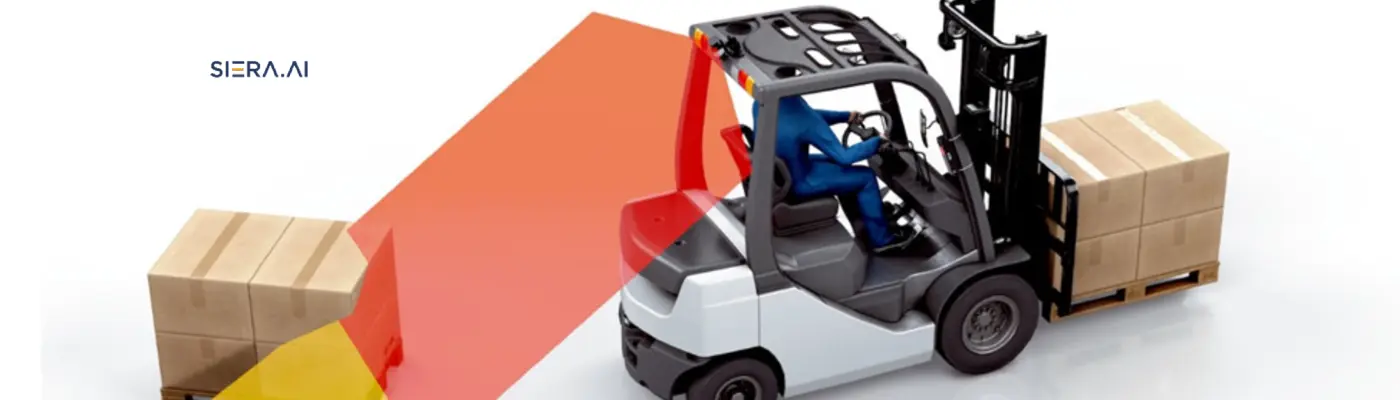
Best Practices for Warehouse Fleets: A successful warehouse AI safety system implementation requires phased change management, starting with a 2 to 5 unit pilot deployment to calibrate edge computer vision detection zones and establish baseline incident data. Pair outward-facing pedestrian cameras with clear operator privacy assurances, resilient IoT/Wi-Fi connectivity, and structured leading-indicator tracking to ensure enterprise-wide adoption. Legacy Fleet Telematics vs. Modern Edge AI Safety PlatformsUnderstanding the structural differences between legacy passive telemetry sensors and active computer vision platforms:
|
The Strategic Shift: Proactive Computer Vision vs. Legacy Fleet Alarms
Traditional material handling safety relied primarily on passive warnings—flashing blue spotlights, backup beepers, and RFID wearable tags. While these tools helped establish base protocols, they suffered from significant operational blind spots:
Alert Fatigue: Repetitive beepers and ambient strobes quickly fade into background warehouse noise.
Tag Dependency: Wearable RFID pucks only alert when a worker actively wears them, leaving contractors, visiting drivers, or unbadged staff completely unprotected.
Zero Contextual Edge Intelligence: Passive sensors cannot distinguish between a solid concrete pillar and a walking pedestrian stepping into a reversing forklift’s blind spot.
Modern industrial AI camera systems execute edge machine-vision inference within milliseconds. By categorizing dynamic human anatomy and calculating trajectory vectors in real time, these platforms provide targeted intervention before a collision occurs.
├── Phase 1 (Weeks 1–2): Site Readiness & IT IoT/Wi-Fi Provisioning
├── Phase 2 (Weeks 3–5): Controlled Pilot (2–5 High-Usage Forklifts)
├── Phase 3 (Weeks 6–7): Data Calibration, Sensitivity Tuning & Change Management
├── Phase 4 (Weeks 8–10): Full Fleet Hardware Retrofit & Telematics Integration
└── Phase 5 (Weeks 11–12): Enterprise Leading-Indicator Safety Reviews
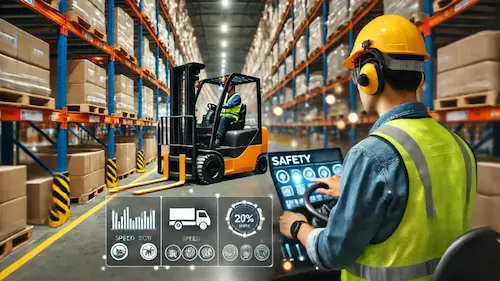
5 Critical Questions for Enterprise Warehouse AI Deployments
Scaling machine-vision safety across high-throughput industrial facilities requires balancing technological integration with human change management. Key implementation checkpoints include:
1. What is the first step when implementing an AI fleet safety system?
Conduct a controlled pilot deployment on 2 to 5 high-usage machines.
Before ordering equipment for hundreds of forklifts across multiple distribution hubs, place pilot hardware on trucks running high-density routes (e.g., cross-docking bays or pallet-wrapping zones).
Use this phase to:
- Map dynamic detection zones (e.g., setting a 3-meter warning boundary and a 1.5-meter critical hazard boundary).
- Capture uncalibrated baseline metrics on true operator near-misses.
- Calibrate edge cameras against ambient warehouse lighting, dust, and reflective high-visibility vests to eliminate false alarms.
2. How should managers address operator pushback against in-cab cameras?
Directly clarify the camera architecture: outward-facing pedestrian detection, not driver surveillance.
Operator resistance usually stems from fear of constant micro-management or driver monitoring. Leadership must establish transparent operational guardrails:
- Show the Optics: Demonstrate that optical sensors point outward—toward mast blind spots and reversing travel paths—to detect external pedestrians, not operator facial features.
- Focus on Exoneration: Explain how timestamped, outward-facing event logs protect operators from blame during disputed pedestrian incidents or unverified racking damage claims.
- Transparent Policy Governance: Involve floor safety champions early and draft written operating procedures outlining who can access telemetry feeds and for what specific safety purposes.
3. How do you measure success during the implementation period?
Track actionable leading indicators rather than waiting for lagging incident statistics.
Measuring success solely by lost-time injuries or OSHA records leaves management operating in the dark. Focus instead on proactive leading metrics:
- Pedestrian Close-Proximity Rates: Quantify the reduction in high-risk pedestrian events (within 2 meters) per 100 operating hours.
- Shock & Impact Event Drops: Track significant decreases in hard cornering, abrupt braking, and pallet/rack jarring.
- Digital Pre-Shift Completion Rates: Monitor compliance consistency with digital daily vehicle inspection checklists before ignition unlock.
4. What IT network infrastructure is needed for a successful rollout?
Facilities require dual-track wireless connectivity: targeted warehouse Wi-Fi zones or independent cellular IoT SIM cards.
- Cellular IoT (LTE/5G SIMs): The best solution for multi-acre facilities where facility-wide industrial Wi-Fi is cost-prohibitive. Cellular modems send critical telemetry, system heartbeats, and near-miss event snippets to the cloud without burdening corporate LANs.
- Wi-Fi Access in Staging Zones: If using local networks, ensure reliable Wi-Fi 6 coverage around battery charging stations, designated parking areas, and drop lanes where trucks idle at shift end for bulk video and firmware synchronizations.
5. How long does a full enterprise implementation typically take?
A multi-site enterprise rollout typically requires 6 to 12 weeks from initial procurement to operational sign-off.
- Weeks 1–2: Stakeholder alignment, worker communications, IT network segmentation, and pilot equipment delivery.
- Weeks 3–5: Pilot installation (2–5 units), initial data logging, and visual zone perimeter tuning.
- Weeks 6–7: Review of baseline data with plant safety teams, alert threshold tuning, and supervisor coaching workshops.
- Weeks 8–10: Full mechanical retrofitting across the broader industrial fleet and telematics tie-in.
- Weeks 11–12: Handover to local EHS leadership, workflow stabilization, and scheduled review cadence.
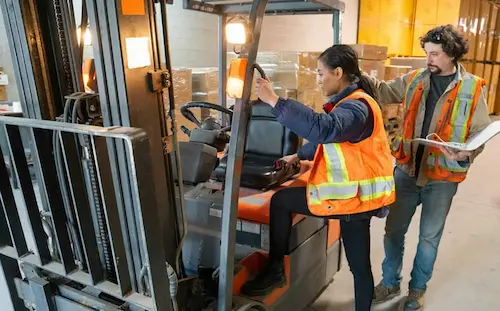
3 Core Pillars of an Industrial AI Safety Rollout Strategy
A successful enterprise transition combines precision technical calibration with transparent cultural engagement:
WAREHOUSE AI SAFETY MATRIX │ 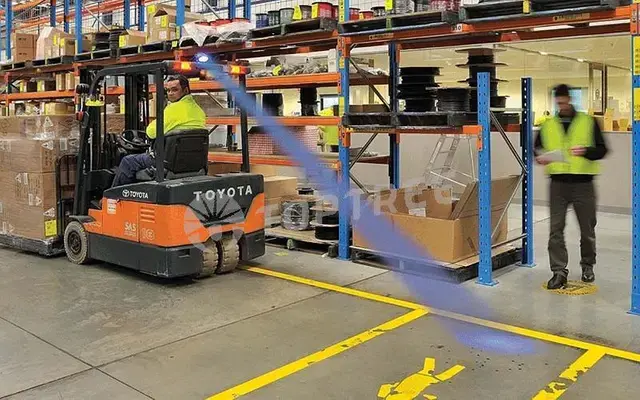 | 1. Edge-Inference Calibration & Zone TuningDeploying optical models in an industrial warehouse requires fine-tuning to its physical layout. High racking rows require tighter detection zones to avoid flagging pedestrians safely walking in adjacent aisles. Edge-inference systems process computer-vision algorithms directly onboard the truck’s processing unit, eliminating cloud communication latency and triggering instant audible, visual, or deceleration alerts. 2. Supportive Change Management & CoachingTransforming safety culture requires moving away from punitive responses. When an AI unit logs repeated close encounters, supervisors should use the event video as an objective, one-on-one coaching opportunity. Focus on structural operational factors: Are walkways poorly marked? Are blind intersections missing convex mirrors? Is production throughput forcing unsafe speeds? 3. Scalable Fleet Telematics & OTA GovernanceSelect modular edge computer vision hardware capable of over-the-air (OTA) model updates. As machine vision platforms improve in detecting low-light operations, recumbent pedestrians, or complex moving machinery, system firmware should update automatically during overnight idle cycles without requiring manual technician servicing on individual trucks. |
Frequently Asked Questions
What is the first step when implementing an AI fleet safety system?
The first step is conducting a pilot deployment on 2 to 5 high-usage machines to test edge detection zones, establish a clean incident baseline, and calibrate alert sensitivity.
How should managers address operator pushback against in-cab cameras?
Address pushback by clarifying that cameras point outward toward blind spots to detect external pedestrians and protect operators from unfounded blame, rather than monitoring the driver.
How do you measure success during the implementation period?
Measure success by tracking proactive leading indicators: drops in pedestrian close encounters, reductions in impact triggers, and sustained digital pre-shift inspection rates.
What IT network infrastructure is needed for a successful rollout?
Facilities require stable Wi-Fi access points in main parking and staging zones for batch syncing, or cellular IoT SIM connectivity directly on the forklifts.
How long does a full enterprise implementation typically take?
An end-to-end multi-site rollout generally takes between 6 to 12 weeks from pilot testing and operator onboarding to fleet retrofitting and governance.
Deploy Enterprise-Grade AI Safety on Your Material Handling Fleet
Prevent warehouse pedestrian accidents with SIERA.AI’s real-time edge vision cameras, proactive collision alerts, and fleet telematics.
Explore SIERA.AI Safety Systems
→ S2 & S3 AI Pedestrian Detection Cameras